
Most scented candles fail for one of two reasons, and neither of them is the wax. Either the candle was the wrong pick for the room it ended up in, or the first burn got rushed and the wick never recovered. Here is how to burn a scented candle properly, from the first light to the last half inch of wax, and how to tell when the candle you are about to buy is the wrong tool for the job entirely.
I spent nine years in the pouring room of a contract candle factory outside Cincinnati, the kind of place that pours the same soy-paraffin blend into a dozen different jars and lets somebody else's label take the credit. I learned wicking from a laminated chart on the wall and a foreman named Ray who could identify a wick by running it between his fingers. Then I spent four years selling candles over a counter at a 300-square-foot shop on the edge of Over-the-Rhine, where customers kept asking the same question: which one should I buy?
That question has an answer, and the answer is a method, not a brand. Trim the wick, let the melt pool reach the edge, never quit after an hour. Most "bad candles" are bad first burns.
Why you should trust me
I keep a burn journal. Dated entries, flame height measured with a ruler, hot throw noted at hour one and again at the halfway mark, soot and mushrooming logged as they happen. Every candle I recommend here has been burned in a closed 12x12 room across multiple three and four hour sessions, because that is the only way to compare one jar to another honestly.
The factory taught me that "premium" on a label is a sticker, not an ingredient. The counter taught me that most people do not have a candle problem, they have a wick problem. The journal settled the rest.
I still trim wicks with kitchen scissors, I still write down every burn, and I still refuse to recommend a candle I have not burned for at least 50 hours. That is the standard. It does not move.
How I picked and how I tested
This is not a roundup of every jar on the shelf. It is a how-to, which means the picks below exist to show two different jobs, and you should be able to run the same test on whatever you already own.
Here is the sequence I run on every candle, and it is the same sequence you can run at home:
- Read the fine print. Wax blend, fragrance load if it is stated, and the wick type. A cotton wick in a wide jar and a cotton wick in a narrow one are two different candles.
- Check the wick against the jar diameter. This is the whole craft on one sheet of paper. Too small and you tunnel. Too large and you soot.
- Smell it cold, nose an inch from the wax. Cold throw is the cheapest way to judge a candle and the least honest one, because hot throw is the whole game.
- First burn. Does the melt pool reach the edge of the jar within two to three hours, or is it burning a hole down the middle?
- Hot throw at hour one, then again at the halfway mark. Leave the room, walk back in, and note how far the scent carries. That distance is your number.
- Soot and mushrooming by hour four, and whether the wick was trimmed before that session.
- Total burn hours divided by what you paid. Price per burn hour is the only honest comparison there is.
What I do not do is write a verdict after 20 minutes. The first 20 minutes prove nothing about a candle.
Match the candle to the job first
Before you compare waxes, decide what the candle is for. In my experience there are only two jobs worth shopping for: a room that has a smell problem, and a gift that has to land with someone whose taste you cannot check. Those two jobs want different candles, and the picks below are one of each.
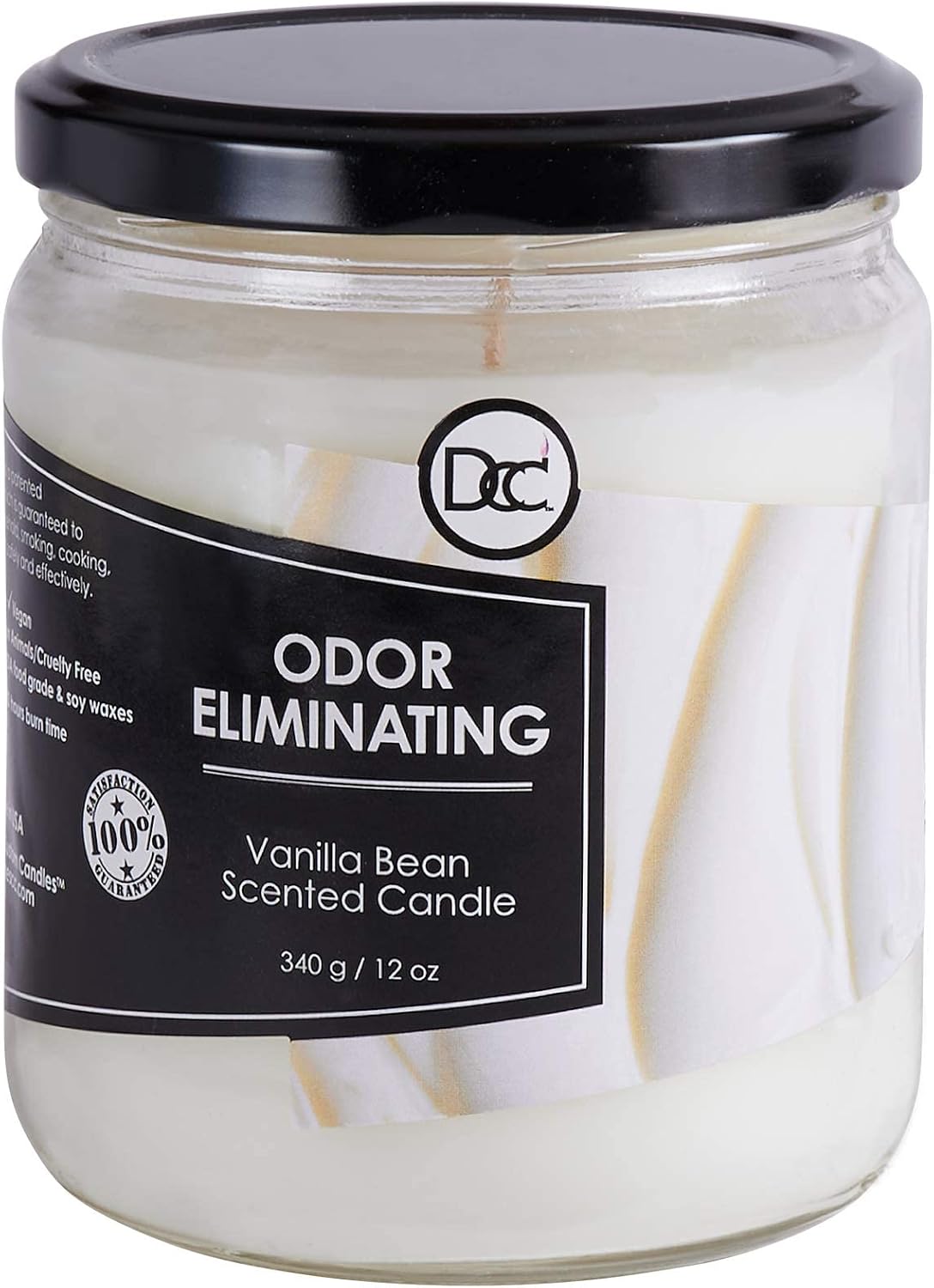
The odor job: Vanilla Bean Odor Eliminating Highly Fragranced Candle - Eliminates 95% of Pet, Smoke, Food, and Other Smells Quickly - Up to 80 Hour Burn time - 12 Ounce Premium Soy Blend
 Visit on Amazon →
Two numbers on this jar are worth writing in your journal before you light it: the claim that it eliminates 95% of pet, smoke, and food smells, and the claim of up to 80 hours of burn time from a 12-ounce jar. Both of those are the label's numbers, not mine. What I can tell you is how to test them.
The 80-hour claim tells you something structural. A 12-ounce jar promising that much runtime is a candle that wants to burn low and slow, which means the first burn matters more than usual. Get the melt pool to the edge on burn one and you have bought yourself the full 80. Rush it, tunnel it, and you will be lucky to see half.
Vanilla is the right note for this job, and it is not an accident. Vanilla reads as clean and heavy in the air, which is why it masks cooking and pet odors instead of fighting them. A floral in the same room just layers on top of the problem.
It is a soy blend, so expect a softer, creamier wax that burns cooler than a paraffin-heavy jar. Cooler wax plus a heavily fragranced load means this is a candle that punishes an untrimmed wick. Keep it at a quarter inch and it stays clean. Let it mushroom and you will get a soot streak down the glass by hour six.
Flaws but not dealbreakers: Highly fragranced candles are loud. In a small bedroom this one can go from "the dog smell is gone" to "the whole house is vanilla" in about 40 minutes. Burn it in the room with the problem, not the room where you sleep.
Anyone dealing with a lived-in room, a litter box, a kitchen, or a house with a smoker in it should start here.
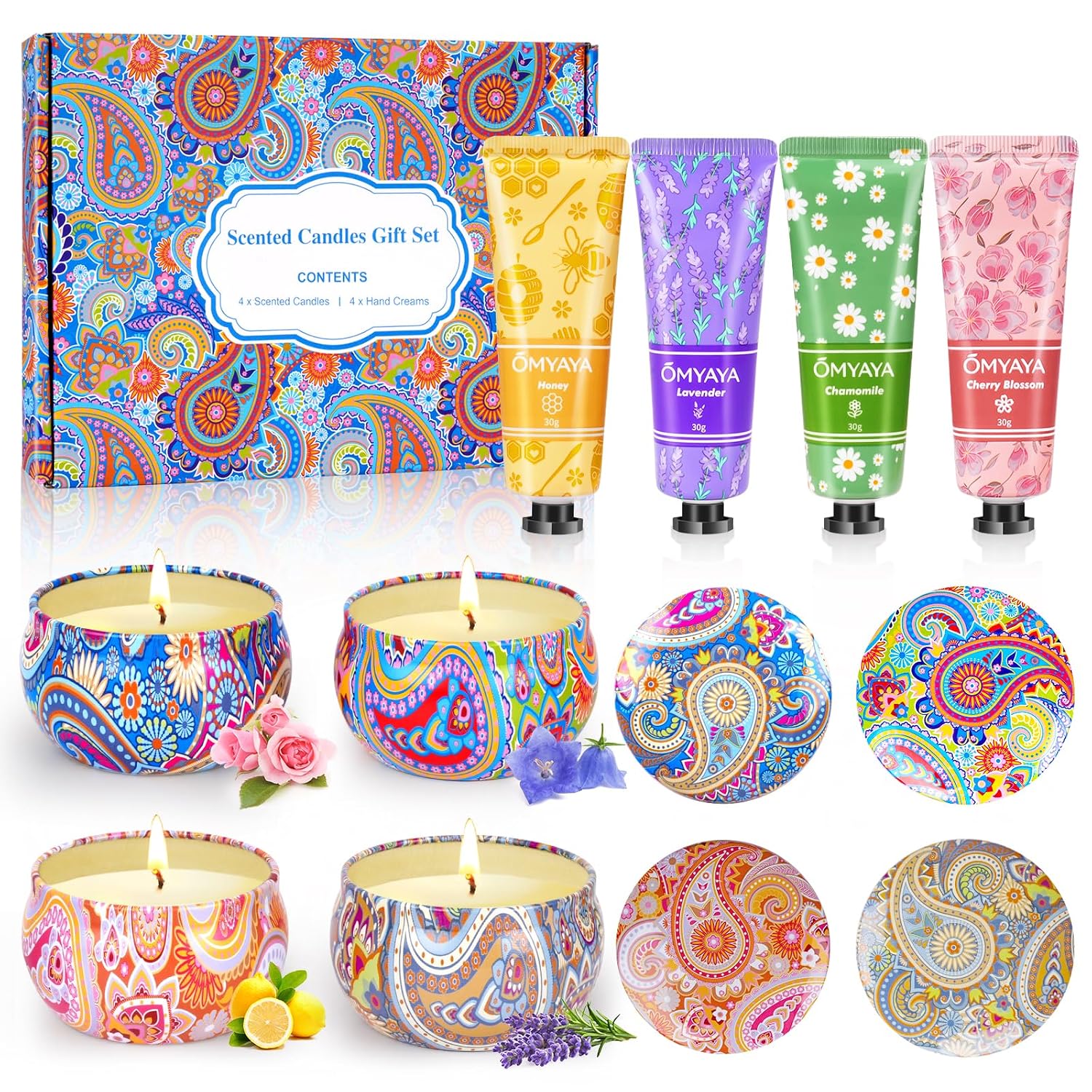
The gift job: Gift Baskets for Women - Scented Candles Gift Set & Hand Lotion Cream Set, Christmas Gift Set, Teacher Appreciation Gifts, Holiday Birthday Gift for Mother Wife Coworkers Friends Teacher
 Visit on Amazon →
A single candle is a hard gift, because you are asking someone to agree with your nose. A set solves that by spreading the bet. This one pairs several scented candles with a hand lotion cream set, which is the part people forget: the lotion is what makes it a gift rather than a candle you handed someone, and it is the piece that gets used up long after the wax is gone.
The other reason sets work as gifts is the sampler effect. Several smaller candles mean the recipient can burn one, decide they love it, and save the rest instead of being stuck with a 12-ounce jar of a scent they merely tolerate. If they hate one, nobody has to say so out loud.
Here is the catch, and it is the same catch as with any small jar. Small vessels have small melt pools and burn through in a few evenings, not a few weeks. Treat a gift set as three or four short sessions, not as an 80-hour workhorse. The first burn rule still applies: two to three hours, pool to the edge, no quitting early. Small candles tunnel faster than large ones, so this is not the place to cut corners.
Flaws but not dealbreakers: Sets like this live and die on packaging, and gift set pricing swings hard around the holidays. Buy early, check the price twice, and do not assume the box arrives looking like the photo.
Anyone shopping for a teacher, a coworker, a host, or a relative they only see twice a year should keep one of these in the closet.
How to burn a scented candle, step by step
Now the part that actually decides whether you got your money's worth. This works on the two candles above and on whatever is already sitting on your shelf.
Step one: pick the room before the scent. Odor control goes in the room with the odor. Ambiance goes where you sit. A candle that has to fight a litter box from two rooms away is a candle that loses.
Step two: read the fine print. Wax blend, wick type, and any fragrance claims. If the label will not tell you what the wax is, that is information too.
Step three: trim the wick to a quarter inch, every single burn. Mushrooming is the carbon ball that grows on an untrimmed tip. It kills your flame height, dims your throw, and streaks soot down the jar. Kitchen scissors work. A wick trimmer works better. Either way, trim before you light, not after you notice the problem.
Step four: the first burn decides the whole candle. Light it, and leave it alone for two to three hours. The melt pool should reach the edge of the glass in that window. If you quit at 45 minutes, the candle remembers that smaller circle and tunnels for the rest of its life.
Step five: four hours per session, maximum. Past four hours the wick gets long, the flame gets tall, and the jar gets hot. I broke my own rule once during a show binge and burned one nine hours straight. I logged the soot streak as penance and I have not done it since.
Step six: check the halfway mark. Trim, relight, and pay attention to flame height. A flame that keeps climbing is a wick that needs attention. A flame drowning in its own pool is a wick that is too small for the jar.
Step seven: if it starts tunneling, fix it now. Trim the wick, then give the candle a longer session than usual so the pool has time to spread outward and melt the wax walls back down. Catching it at hour ten is cheap. Catching it at hour 40 is not.
Step eight: stop with half an inch of wax left. Below that the wick is unanchored, the jar gets hotter than it should, and you risk scorching whatever the candle is sitting on. Let it go.
Judge throw like a number, not a feeling
"Fills the room" is a marketing sentence until somebody burns it in a closed room and measures. So measure it.
Light the candle, leave the room, close the door, and come back in two minutes. Note how far from the jar the scent reaches. Then do it again at hour three. A candle that throws hard at hour one and fades by hour three is a front-loaded candle, and a lot of heavily fragranced jars are exactly that.
Write the distance down. Do it for two candles and you will never be fooled by a label again. That is the whole point of the journal: not to be precious about it, but to have a number you can compare against the next jar.
What this all costs
The honest math is price divided by logged burn hours, and the label's runtime is the number you are trying to hit, not the number you already have. A jar that claims up to 80 hours and gets tunneled at hour 30 is a worse deal than a cheap candle that burns clean for 20.
Gift sets change the math because you are buying several small candles plus lotion, and the lotion outlives all of them. If you are shopping a set as a gift, the cost is really spread across the candles and the cream together, which is why sets tend to feel like better value than they are as pure candle-per-hour math.
Check current Amazon price on both before you decide, and check it twice if you are buying near a holiday.
What I would not do with either one
Do not burn the heavily fragranced vanilla jar in a tiny closed bedroom. Loud candles in small rooms go from solved to suffocating fast.
Do not judge a gift set by lighting one candle and calling it a review. Sets are a sampler, and the whole value is in having options.
Do not burn either one with a wick longer than a quarter inch and then blame the candle. I have watched people return "defective" candles that were simply mushroomed. It is almost always the wick.
And do not put a candle under a warmer unless you have tested it. A warmer melts the top inch with no flame, which stretches a jar roughly three times longer, but the throw is gentler and a cheap warmer can scorch a label off glass. Check the height adjustment before you trust it with anything you love.
The short version
Match the candle to the job first. Odor problems want a heavy vanilla jar with a runtime you can verify. Gifts want a set, because a set hedges the scent bet and throws in a lotion that outlasts the wax. Then do the same three things on every candle you own: trim to a quarter inch, burn two to three hours on the first light until the pool hits the edge, and cap every session at four hours.
That is the whole method. The wick is the game, the first burn is the test, and the journal is how you stop guessing.