Candle storage is the unglamorous half of this hobby, and it decides whether the jar you bought in October still throws in February. I have watched a thirty dollar candle turn into a thirty dollar lump of scented wax because it spent July on a windowsill, and I have watched a two year old jar light up a closed room because somebody kept it in a dark closet in a sealed bin.
The short version: heat, light, dust, and a bent wick are what kill stored candles. Fix those four and the wax holds its cold throw for years and its hot throw for most of them.
This is the candle storage system I use at home and the one I taught at the shop counter. No freezer tricks, no vacuum bags, no folklore. One afternoon, one honest container, and a labeling habit you will actually keep.
Why you should trust me
I spent nine years in the pouring room of a contract candle factory outside Cincinnati, where the same soy paraffin blend went into a dozen different jars and other people's brands took the credit. I learned wicking from a laminated chart on the wall and a foreman named Ray who could identify a wick by running it between his fingers. Then I ran the WickShed, a 300 square foot candle shop on the edge of Over the Rhine, for four years, pouring soy in the back and stocking other makers' jars up front.
Every candle I recommend has 50 or more logged burn hours behind it, in a closed 12x12 room, with a stopwatch, a ruler, and a notebook. The burn journal outlived the shop. Storage is the other half of that journal, because a candle that sat in a hot garage all summer does not burn the way the same candle burned the week I brought it home.
How I picked and how I tested
Storage is not a product category with spec sheets, so the test is behavioral. I take a jar I have already burned and logged, store it for a season in a candidate container in a real part of a real house (closet shelf, basement shelf, garage shelf), then bring it back to the burn room and check three things.
First, cold throw: does it still smell like the candle I bought, or like cardboard and dust. Second, the wick: still straight, dry, and free of fuzz, or gone soft and gray. Third, the wax surface: smooth, or cracked, discolored, or weeping oil.
A container passes if the candle comes back to the burn room indistinguishable from the day I shelved it. Most of what I tried failed on light, moisture, or crush damage. The candle below is the control I keep rebuying, and the bin is what holds the rotation. Prices move constantly, so check current Amazon price when you shop.
The two things you need before you box a single jar
You do not need a storage wall or a labeled archive. You need one candle worth protecting and one container that protects it. Everything else in this guide is technique.
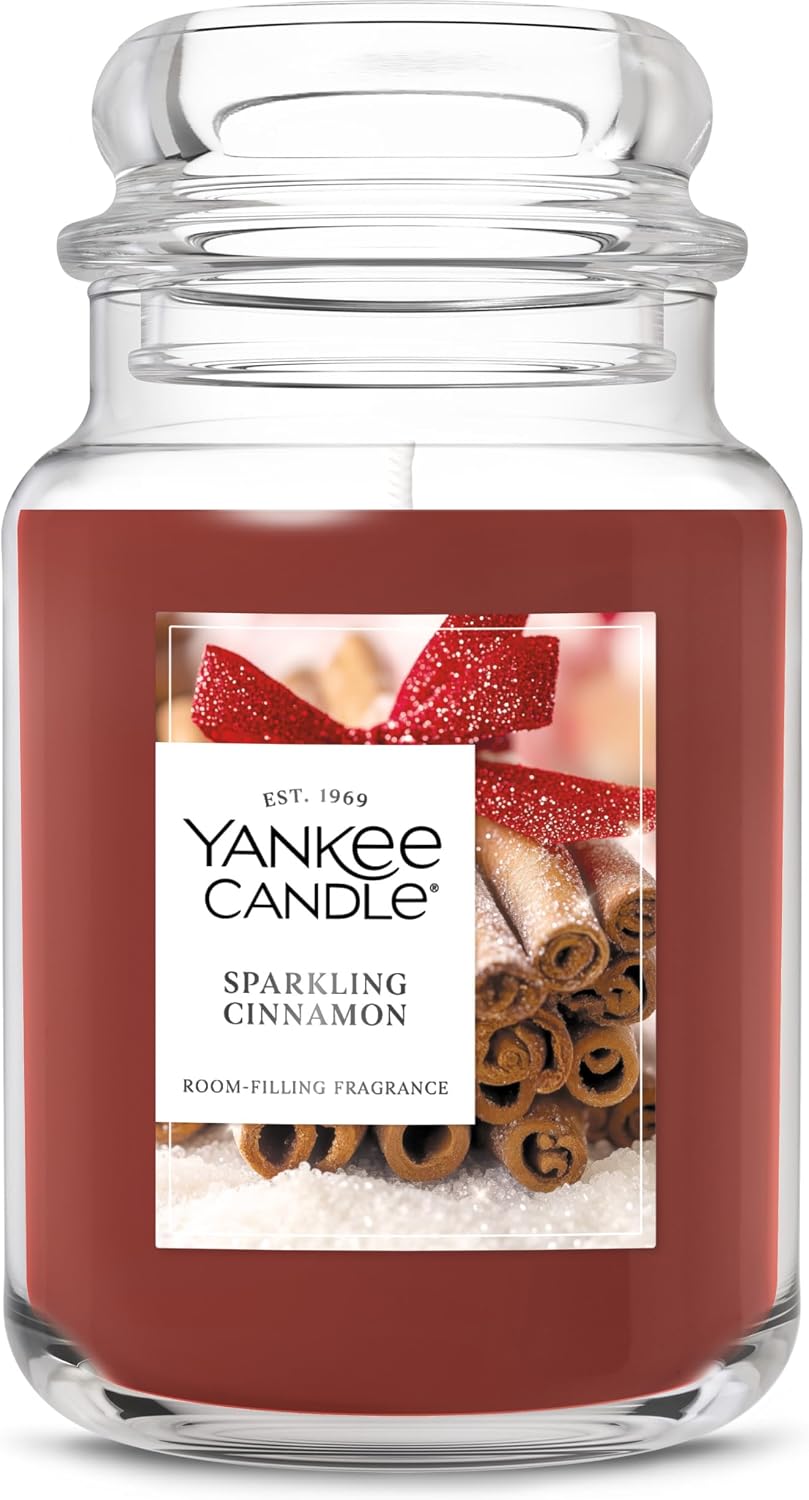
The control candle: Yankee Candle Sparkling Cinnamon Scented Candle, 22oz Large Jar
 Visit on Amazon →
A 22 ounce large jar is the format this whole system was built around: wide mouth, tight glass lid, and enough wax that a careless summer can cost you real money. The Yankee large jar is still the throw king for the money in my journal, a paraffin heavy blend that carries cinnamon across a room from hour one, and it is the candle I use to judge every storage method because I know exactly what it is supposed to smell like cold.
Two habits matter with this jar. Trim the wick to a quarter inch every other burn or it mushrooms, and put the glass lid back on the moment the flame is out. That lid is your first layer of storage, and most people skip it because the candle is still sitting on the coffee table. Check current Amazon price, and buy it when you actually plan to burn it, not to hoard it in a hot car.
Flaws but not dealbreakers: Paraffin heavy means a strong hot throw and a wax that softens faster in heat than a straight soy jar. That is an argument for the bin, not against the candle.
Anyone who burns a large jar through the winter and wants next winter's jar to smell the same will get the most out of this one.
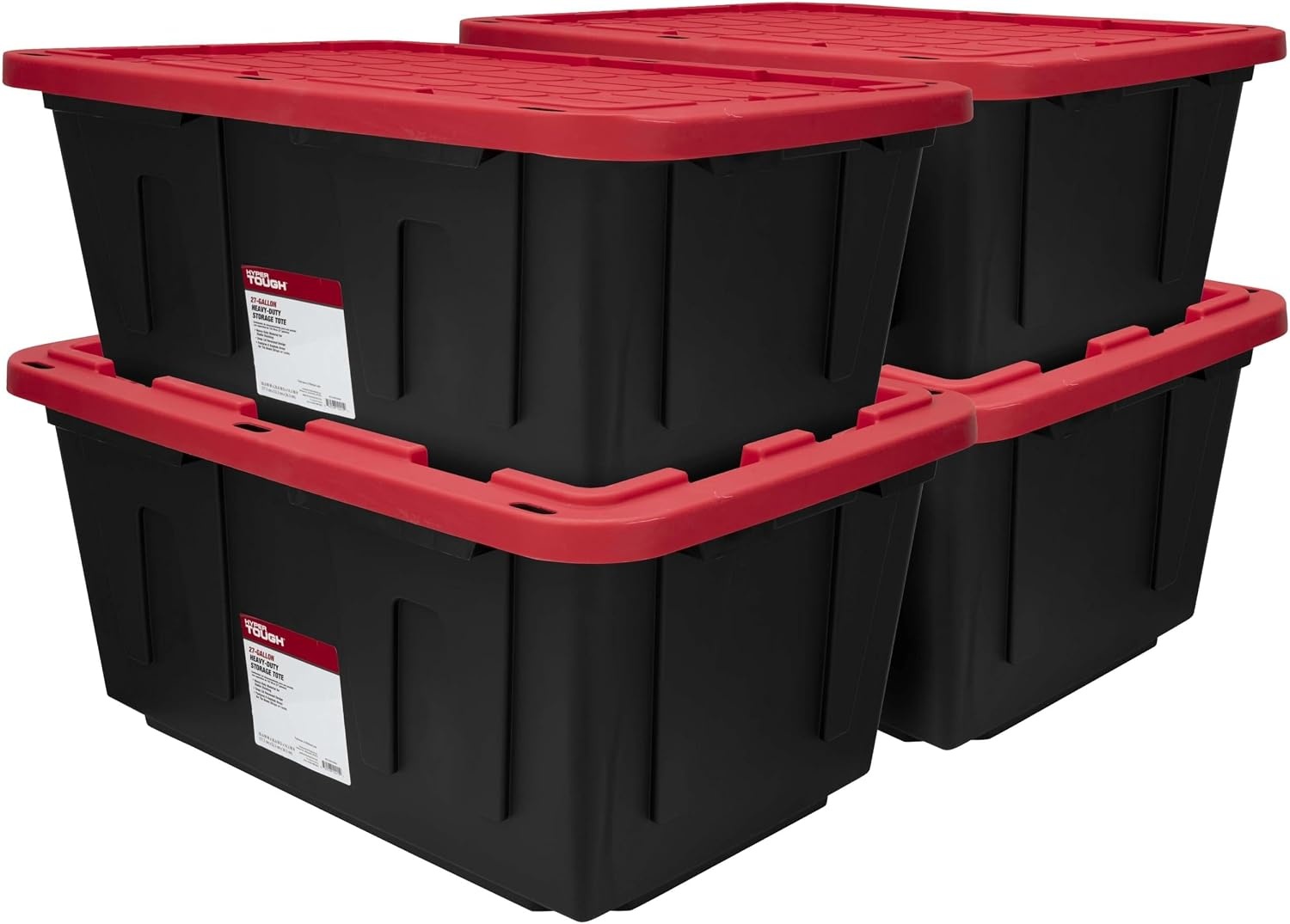
The bin that holds the rotation: 27 Gallon Heavy-Duty Plastic Storage Bin, Black and Red, Pack of 4
 Visit on Amazon →
This is the container that makes the system work, and the size is the reason. Twenty seven gallons is enough to stand large jars upright instead of laying them on their sides, which matters because a jar stored on its side puts wax against the lid and can weep oil into the seal. Heavy duty walls mean the bin does not bow when you stack a second one on top, and the black shell blocks the light that fades fragrance oil and discolors wax over a long summer.
The pack of four is the part I like most, because it lets you sort by season or by scent family instead of digging through one giant box every November. Red accents make them easy to spot on a basement shelf. Be honest about what this bin is: it is a rigid, dark, stackable box, not a gasketed tote, so the candles' own lids still do the sealing work. Check current Amazon price before you commit to a four pack.
Flaws but not dealbreakers: It is a big footprint. Measure your closet shelf before you order four of anything.
Anyone with a real collection, more than a dozen jars, will use all four. Anyone with three candles should buy one bin and a better shelf.
The actual storage workflow
Here is the part you came for. This works with any lidded candle, not just the jar above.
Step one: trim before you store. A quarter inch of wick, no carbon ball, no fuzz. A mushroomed wick left in storage hardens into a carbon knot that will fight you on the next light and throw soot down the glass. Trim it now with kitchen scissors, the way I still do, and it is done.
Step two: lid on, always. The glass lid or tin lid is the first seal and the only one that touches the wax. Candles left open in a closet absorb the closet. I have pulled jars that smelled like dryer sheets and cedar closet liner, and there is no fixing that.
Step three: pick a container that lets jars stand up. Upright is the rule. A jar on its side puts weight on the lid, pools wax against the seal, and gives the wick a chance to bend. This is the single biggest reason I moved from cardboard boxes to rigid bins.
Step four: keep it cool. A cool interior closet beats a garage every time. Heat softens wax, pushes fragrance oil to the surface, and can leave the wax pulling away from the glass. If your only storage is a garage that bakes in July, store the cheap jars there and keep the good ones inside.
Step five: keep it dark. Light is the slow thief. It fades the fragrance and can yellow the wax, which is why an opaque bin beats a clear one and a closed closet beats a decorative shelf. If you love looking at your collection, display three jars and store the rest.
Step six: keep it dry. Not a damp basement floor, not a bathroom, not next to a water heater. Moisture on a wick is a wick that will not light cleanly, and a damp box is a box that smells like a damp box.
Step seven: separate the loud ones. Long storage in a sealed bin lets strong scents drift. Balsam next to vanilla is a coin flip. I keep the heavy hitters, pine, smoke, clove, in their own bin and let the soft florals share.
Step eight: label and rotate. A strip of masking tape on the lid with the month and year you stored it. First in, first out. This is the habit that turns a pile of candles into a rotation, and it costs nothing.
Step nine: let a cold candle come back to room temperature before you burn it. Pull the jar out the night before, or at least an hour ahead. A cold jar fights the first burn, and the first burn decides the whole candle. If the melt pool does not reach the edge in two to three hours, you are on your way to tunneling.
Storage methods that lose
Cardboard boxes are the classic mistake. They breathe, they hold dust, they crush, and they smell like cardboard, which the wax eventually agrees with. They are fine for a month and wrong for a year.
Plastic grocery bags trap moisture and whatever the bag last carried, and they do nothing about light or crush damage. A bag is a bag.
Open shelving looks beautiful and stores nothing. Dust settles into the wax, light fades the top note, and a shelf near a heating vent is a slow bake.
The freezer is the folklore answer and the wrong one. Cold cracks wax, pulls oil to the surface, and puts condensation on the wick. The refrigerator is worse, because now your candle smells like leftovers.
The garage shelf works in April and fails in August. If you must use a garage, use the lowest shelf away from the door and accept that a hot summer costs you some throw.
Vacuum sealing is overkill for a candle and can crush a soft jar. The lid, the bin, and the closet already do the job.
What this all costs
The math here is simple and honest. You are protecting a candle that costs real money per burn hour, and the container is the cheapest part of the system. Check current Amazon price on the jar and on the four pack of bins, then run it as price per stored jar: divide the bin cost by how many jars fit standing up, and it comes out to a few dollars per candle protected. Compare that to replacing a whole winter rotation because it sat in a sunny window, and the bin pays for itself the first season.
One bin, one roll of masking tape, one pair of kitchen scissors. That is the whole kit.
Do this once, in an afternoon, and every candle you own gets better: the cold throw stays honest, the wicks stay straight, and the first burn behaves the way the maker intended. Your candles were built to be stored well. Let them.