Candle storage and organization is the unglamorous half of this hobby, and it is the half that decides whether your jars still smell like anything next winter. I have watched people spend real money on good candles and then park them on a sunny windowsill, on a bathroom shelf, or in a cardboard box in a garage that swings from 95 degrees in August to below freezing in January. Then they blame the candle.
Wax and fragrance oil are in a slow negotiation from the day the jar is poured. Heat speeds that negotiation up. Light speeds it up. Air, dust, and a lid that never goes back on speed it up. Storing candles well does not stop the clock. It slows the clock, which is the same thing as getting more burn hours and more throw out of every jar you already own.
This is not a buying guide wearing a how-to costume. It is the routine I ran in the back room of my shop, the same one I run now for the burn journal, plus the two pieces of gear that make it practical: a container for the collection and a set of jars worth putting in it.
Why you should trust me
I spent nine years in the pouring room of a contract candle factory outside Cincinnati, where the same soy-paraffin blend went into a dozen different jars under a dozen different labels. I learned wicking from a laminated chart on the wall and from a foreman named Ray who could identify a wick by running it between his fingers. Then I opened a 300-square-foot candle shop called the WickShed on the edge of Over-the-Rhine, poured my own soy in the back, stocked other makers' jars up front, and stored four years of inventory in a room with one small window and no air conditioning.
That back room taught me more about candles than the pouring pot did. Heat bleeds fragrance. Light fades dye and dulls the wax. A jar stored next to a bottle of bleach smells like a bottle of bleach by the time you light it. And the customer who returned a "defective" candle was almost always holding a candle that had been stored badly or burned badly, in that order.
How I picked what is in this guide
I judged storage gear on five things. Does it keep heat, light, and dust off the wax? Can I see what I have without unpacking everything? Does it stack without putting weight on glass? Will it still be useful after the candles are gone? And does it fit a normal closet shelf or a basement corner?
For candles, the bar is different. A set of small jars lives or dies on whether the fragrances are distinct enough to justify the shelf space, and on whether the jars are small enough that you will actually finish them instead of leaving half an inch of wax in twelve jars.
The two products below answer one half of that question each.
Start with the container, not the candles
Most people buy candles first and figure out storage last, which is why so many collections end up in a paper shopping bag on the floor of a closet. Buy the container first and the candles have somewhere to land.
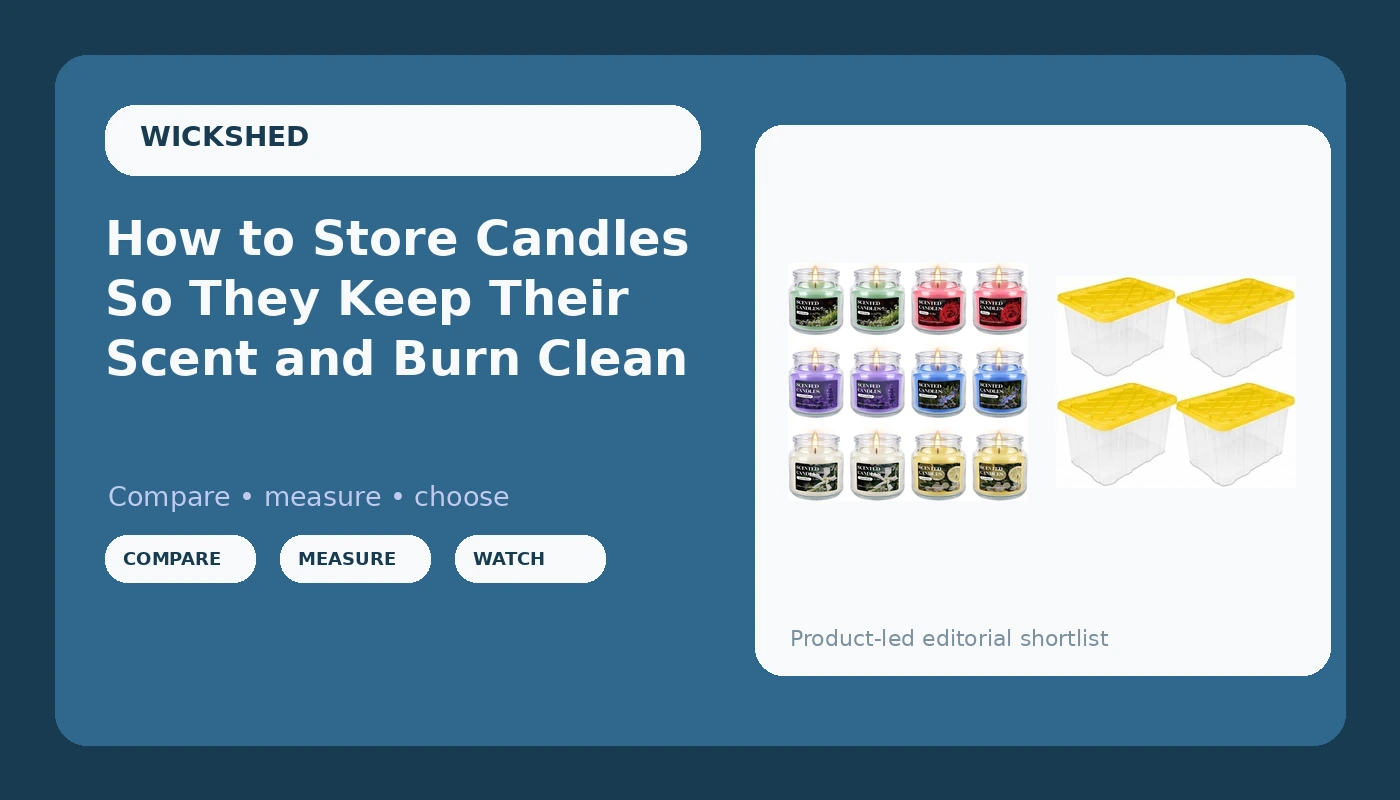
Storage pick: Large Industrial Storage Bins with Lids, 27 Gallon Clear Plastic Tote for Garage & Basement, Heavy Duty Stackable Totes for Storage and Organization, Yellow, 4-Pack
 Visit on Amazon →
A 27 gallon tote is the size that makes a candle collection stop being a pile and start being an inventory. Four of them, stacked, will hold more jars than most people will burn in five years, and the clear walls are the feature that matters most: you can see the whole collection through the side without pulling a lid, which means you actually rotate it instead of forgetting what is in the bottom bin.
The lids are the other half of the job. Dust settles into the wax and into the wick, and a wick that has been sitting open in a basement for a year burns differently than one that has been covered. Lids also cut down on scent migration between jars, so a cinnamon jar does not quietly turn your lavender jar into a cinnamon jar.
Two honest caveats. Clear plastic is not light-proof, so treat the tote as the container and the closet, basement, or interior garage wall as the protection. Put the tote where the sun does not hit it and the clear walls stop being a liability. Second, glass is heavy. A 27 gallon tote packed with full-size jars is a two-person lift, so split your collection by season instead of filling one bin to the brim.
Flaws but not dealbreakers: The clear walls show everything, including the clutter of a half-sorted collection. If you want tidy, use the yellow bins for long-term storage and keep one clear bin for the current rotation.
Anyone with more than a dozen jars and no dedicated cabinet will get their money back in candles that still smell like what the label promised.
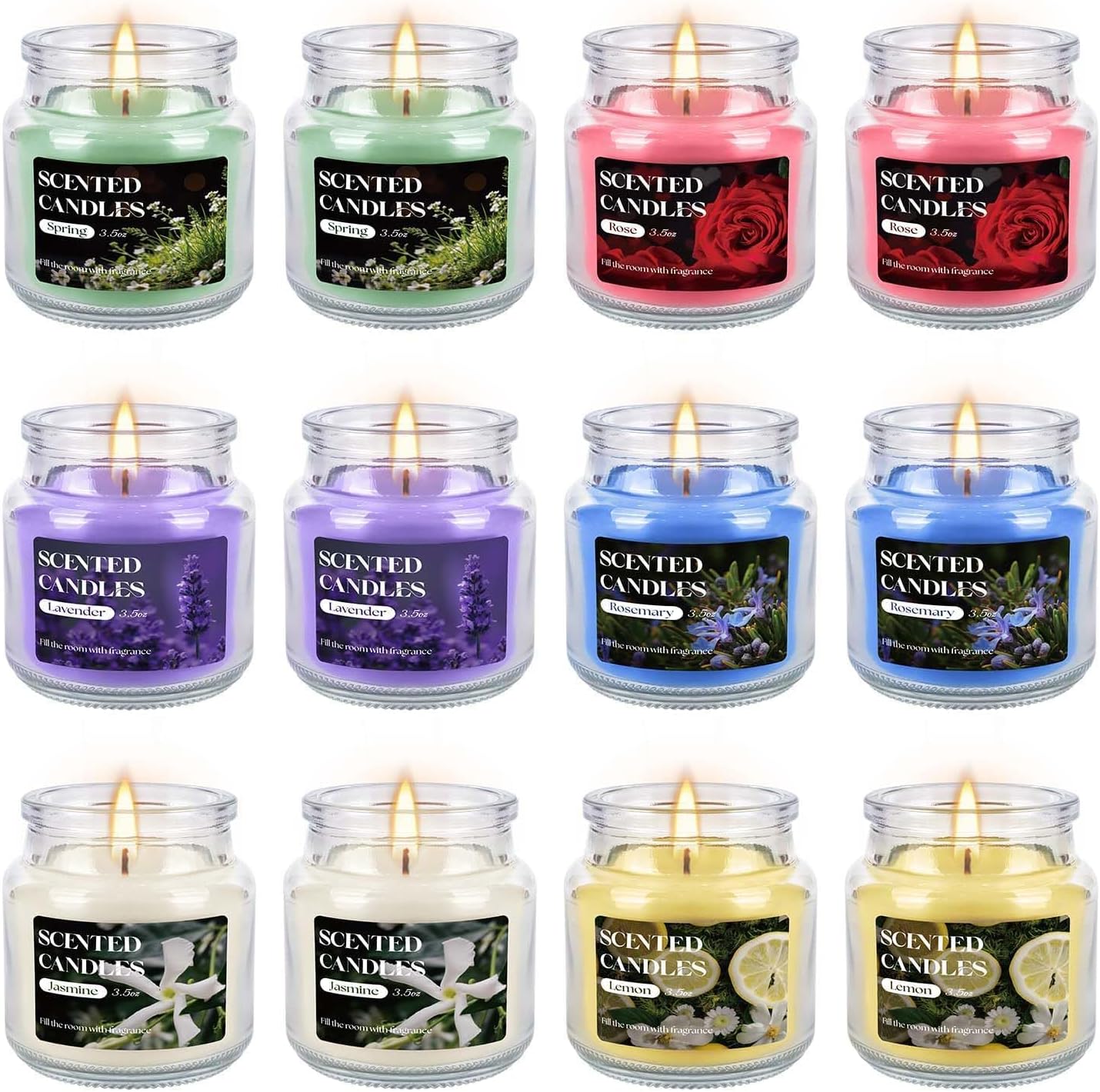
Rotation pick: 12 Pack Scented Candles Set - 3.5oz Soy Wax Aromatherapy Candles with 6 Fragrances, Long Burning Glass Jar Candles for Home Bedroom Kitchen Bathroom Dining, Gift Set for Women Men
 Visit on Amazon →
This is the set I would hand someone who is still figuring out which scents they actually burn. Twelve 3.5 ounce soy wax candles, six fragrances, glass jars, which works out to two jars per scent. That is enough to burn one now and keep one back, and the second jar is more useful than it sounds, because it becomes your control: if the first one smelled right cold and thin hot, you will know it was the candle and not your nose that day.
The format is the point. Small jars mean short sessions, so you can burn a different fragrance every night for a week, learn what you like in a bedroom versus a kitchen, and never commit four hours to a scent you are not sure about. For a guest room, a bathroom, or a desk, a jar this size is a complete thought.
The honest limits: 3.5 ounces is not a marathon candle. These are rotation jars, not the jar you light for a four-hour movie. In a big open living room the throw will be gentler than a large paraffin-heavy jar, which is exactly what you want in a small room and exactly what you do not want at a party.
If the jars have lids, keep them. The lid is the cheapest storage tool you own, and it is the difference between a jar that smells like its fragrance in March and one that smells like the shelf it sat on.
Flaws but not dealbreakers: Six fragrances in one box means six chances to fall in love and six chances to end up with four jars you never touch. Group them by family inside the tote so you can find the one you want without unpacking the whole layer.
Anyone building a first rotation, or buying a gift for someone whose taste they do not know yet, is the right buyer for this set.
The storage workflow, step by step
Step one: choose the room before the container. Cool, dark, dry, stable. A basement shelf, an interior closet, the back of a cabinet. Not the bathroom, where steam and soap and shampoo fight your candle for the air. Not above the stove. Not a windowsill. And not a garage that bakes in summer, because heat is the one thing that does permanent damage: it softens wax, pushes fragrance oil to the surface, and can leave you with a sweaty, oily jar that never throws the same again.
Step two: sort into three piles. Current rotation, next season, long-term. If you cannot remember when you bought a candle, it goes in long-term.
Step three: inspect every jar before it goes in. Lid seated, wick trimmed to a quarter inch, no soot streaks on the glass. A trimmed wick is a candle that is ready to burn the moment you pull it out, and it keeps the wick from bending under a lid for months.
Step four: keep the original jar. Do not decant candles into prettier containers. The jar was matched to the wick and the wax, and moving a candle means breaking the seal, exposing the wax, and re-seating a wick by hand. Leave it alone.
Step five: group by scent family. Vanilla and bakery in one bin, balsam and woods in another, florals in a third. This is not about aesthetics. Jars that share a family sit well together, and if any jar is not perfectly sealed, it is trading scent with a cousin instead of with a stranger.
Step six: put the rotation on top. The whole system fails if the candle you want tonight is at the bottom of a stacked tote. One shallow layer of current rotation at the top, or a separate small bin, keeps the good jars in reach.
Step seven: label the tote and date it. An index card taped inside the lid: what went in, and when. In three years you will not remember, and the card is the difference between rotating and hoarding.
Step eight: stack, do not crush. Full-size jars on the bottom, small jars on top, nothing resting on a wick. If you are stacking totes, keep the heaviest on the floor or the lowest shelf.
Step nine: store upright, always. A jar on its side can weep oil at the seal, and wax that has been reshaped by gravity can tunnel when you finally light it.
Step ten: rotate oldest first, and cold-throw test before you burn. Once a season, open the tote, take the lid off one jar, and smell it cold from an inch away. If the cold throw is still there, the candle is fine. If it smells like wax and nothing else, burn it in a small room rather than saving it for a special occasion that never comes.
Step eleven: first burn like you mean it. Storage gets a candle to the match. The first burn decides the rest. Trim the wick, let the melt pool reach the edge of the jar, and give it two to three hours. Pulling a candle at the one hour mark is how you get a tunnel that no amount of storage discipline will fix.
What does not work, and why
Cardboard boxes are the most common mistake. Cardboard drinks scent, holds moisture, and collapses when you stack it, which means the box that protected your candles for a year crushes them in the second. Grocery bags are worse: no structure, no dust protection, and whatever was in the bag is now in your wax.
Bathroom shelves are a trap for a different reason. Humidity and constant temperature swings, plus a room full of other scented products, means your candle is competing with shampoo and losing.
Windowsills and glass shelving in direct sun fade the dye and degrade the fragrance. If a jar looks bleached after a summer, that is the light, not the wax.
Garage floors are the worst-case storage. Gasoline, oil, and two-stroke exhaust are the fastest way to ruin a candle, and floor moisture wicks into cardboard and into unsealed jars.
And the biggest one: an open decorative basket on a shelf. Dust settles into the wax and into the wick, and the wick is the whole game. A basket is a display, not a storage system.
What this all costs
Candles are a luxury, and storage is the one part of the hobby that pays you back. The tote is a one-time purchase that outlives every candle you put in it. The candles are the consumable. Compare on price per burn hour rather than sticker price, and a set of small jars stops looking cheap or expensive and starts looking like what it is: a low-risk way to find out which scents you actually burn before you spend real money on a large jar you might not finish.
Check current Amazon price on both before you commit, since both move.
The rest is habit. Trim the wick, keep the lid on, put the tote in the dark, and burn oldest first. Do that and you will get every hour and every bit of throw the maker put in the jar, which is more than most people get.