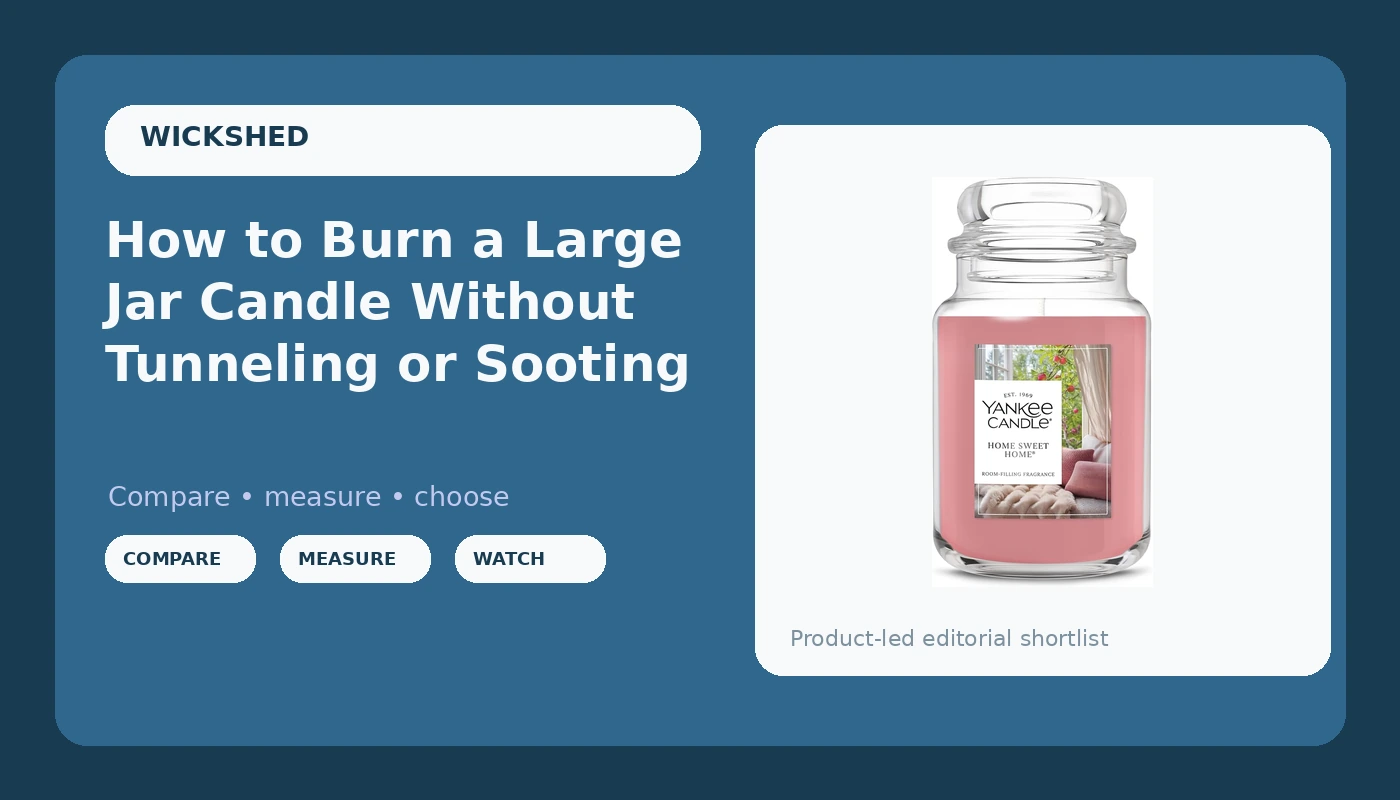
Most large jar candles don't die of bad wax. They die of a first burn that lasted forty minutes. The flame gets lit, the top half inch softens, the doorbell rings, and the candle goes out with a crater the size of a quarter sitting in the middle of a four-inch jar. From that night forward it is a chimney: the wick tunnels down the center, the wax walls stand around it like a fence, and somewhere around hour thirty the flame is drowning in its own pool. Learning how to burn a large jar candle is mostly learning to sit with it for one long first session. Everything else is maintenance.
I spent nine years in the pouring room of a contract candle factory outside Cincinnati, where the wick chart hung on the wall under a layer of laminate and a foreman named Ray could identify a wick size by running it between two fingers. The one thing that room taught me is that the wick is the whole game, and the wick only works if the wax around it cooperates. A large jar is the hardest format to get right because it has the widest melt pool to build and only one wick to build it with.
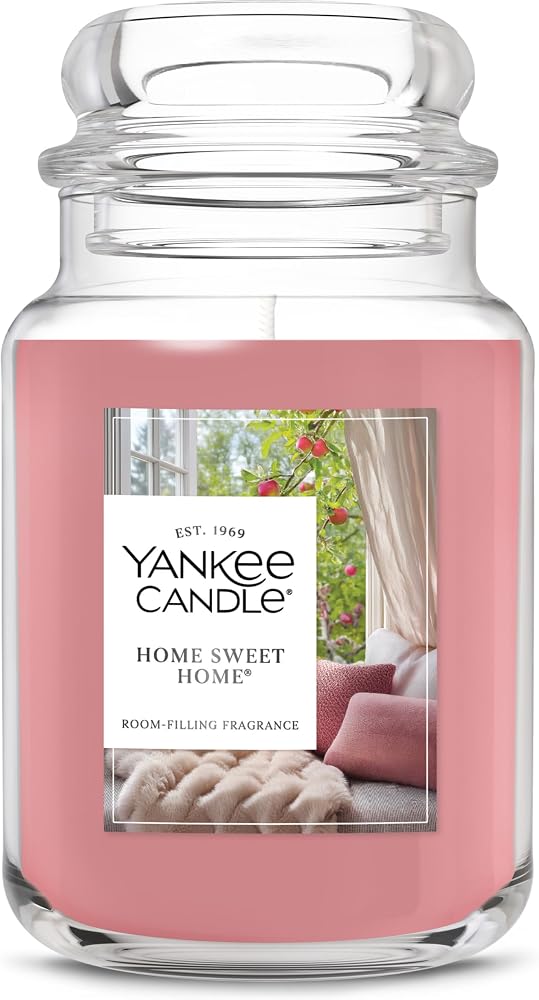
The jar I burn most often in this size class is Yankee's Home Sweet Home in the 22oz large jar, and it is a good teaching candle because it punishes impatience immediately. Burn it right and it runs long. Burn it for an hour and forget it for a week and you will be scraping wax off the glass with a butter knife. Here is the full routine, plus what to do when it goes sideways.
Why you should trust me
I poured soy and soy-paraffin blends for nine years before I opened a 300-square-foot candle shop called the WickShed on the edge of Over-the-Rhine. I poured in the back, stocked other makers' jars up front, and answered the same question over the counter every day: which one should I buy? I stopped guessing and started burning. Every candle I stocked came home and went into a closed 12x12 room with a stopwatch, a notepad, and a ruler for flame height. The shop lasted four years. The burn journal outlived it.
Nothing on this site gets recommended without fifty-plus logged burn hours across multiple three and four hour sessions. Nothing gets called room filling without a hot throw number measured in that closed room, from across it, not from an inch above the wax. This month I am working through the winter lineup on a four-hour rotation, fourteen jars logged, from Balsam & Cedar down to a six-dollar grocery store special, and the laminated wick chart from the factory still hangs over my desk as a reminder that diameter decides everything.
What a large jar candle actually needs from you
A candle is a wax, a wick, and a fragrance load that have to agree with each other. In a 22oz jar, that agreement is fragile for three reasons.
The first is diameter. A wide jar needs a wick that can throw enough heat to melt wax all the way to the edge in two or three hours, not five. If the wick is undersized for the jar, you get a small pool and a slow tunnel no matter how carefully you burn it.
The second is session length. Small candles forgive a twenty-minute burn. Large jars do not. The first burn has to establish the full diameter of the melt pool, because wax has a memory: it melts to the edge it has already reached, and it stops at the wall it has already built.
The third is fragrance load. More oil is not better. An overloaded jar soots, smells like a cleaning product at hot throw, and clogs the wick with carbon. The fine print on the label matters more than the word premium printed above it.
Our pick: Yankee Candle Home Sweet Home Scented Candle, 22oz Large Jar | Up to 150 Hour Burn Time, Room Filling Fragrance, Long-Lasting Scent, Premium Plant Wax Blend, Consistent Burn, Giftable
 Visit on Amazon →
Check current Amazon price. This is the jar I hand people who tell me they don't understand candles. The scent is cinnamon and baking spice with a soft vanilla base, the kind of thing that reads as a house rather than a perfume counter, and the cold throw off the wax is honest about what you'll get at hot throw. The label puts the burn time at up to 150 hours, which is a big number, and the reason it is reachable is that the wick is matched to the jar's diameter instead of being an afterthought. That is the whole trick with large jars and it is the thing most cheap 22oz candles get wrong.
In my journal this format behaves the way the Yankee large jars always have: hot throw that shows up in the first hour rather than blooming at hour three, and a flame that holds steady if you keep the wick trimmed. The blend is a plant wax blend per the label, but the label's real work is being done by the fragrance load and the wick, not by the word premium. Trim this one every other burn or the tip mushrooms and your flame height drops, which dims the throw and streaks the glass.
Flaws but not dealbreakers: Home Sweet Home is a heavy, sweet scent and it will overwhelm a small bedroom. Burn it in a living room or an open kitchen. The glass gets hot enough near the bottom third that you want it on a trivet, not directly on a finished wood table. And like every large jar, it demands the full first burn. There is no shortcut around that.
Homeowners who want one jar that fills a main room and runs for months of evenings will be happy here.
The first burn, step by step
This is the routine I ran on every candle in the shop, and it is the same one I run at home. It takes one evening.
Step one: Trim the wick to a quarter inch. Not an eighth, not a half. A quarter inch. I use kitchen scissors because that is what I have, and a ten-dollar wick trimmer does the same job with a nicer handle. Trim before every burn, not just the first. Long wicks burn hot and fast, which sounds efficient and is actually how you get soot streaks.
Step two: Pick the room, then close it. A closed room is how you judge hot throw honestly, and it is also where a candle behaves. Drafts from a ceiling fan, an open window, or a forced-air vent make the flame dance, and a dancing flame burns unevenly and smokes.
Step three: Light it and leave it alone for two to three hours. The melt pool should reach the edge of the glass inside three hours. If your jar is four inches across and the pool is still two inches wide at hour three, the wick is undersized or the room is too cold. Either way you now know something useful.
Step four: Watch the flame height, not the clock. A healthy flame on a large jar sits somewhere between half an inch and an inch. Taller than that and the wick is too long. Flickering sideways means a draft. A flame that shrinks and leans into the wax means the pool is drowning the wick.
Step five: Blow it out before the four-hour mark. Four hours is my ceiling, and I say that as someone who once burned a candle nine straight hours during a show binge and logged the soot as penance. Past four hours the wick carbonizes, the fragrance oil burns off, and the jar starts to smell like the wick instead of the scent.
Step six: Let it cool completely, then lid it. Lidding a hot jar traps a wet, ashy smell into the wax and you will taste it on the next burn.
Step seven: Trim again before the next session. Every time. This is the single habit that separates a jar that runs its full advertised life from a jar that dies at hour forty with black glass.
Troubleshooting: the three ways a large jar goes wrong
Tunneling. A hole down the center with wax walls around it. If you catch it early, you can sometimes rescue a jar by wrapping a ring of foil around the top with a hole in the middle, which traps heat and pushes the pool outward. If the tunnel is deeper than an inch, the honest answer is that the first burn is gone and you should start scraping. Tunneling is the first burn's fault. It is almost always the wick's fault too, but you can't fix a wick you already bought.
Mushrooming. The carbon ball that grows on an untrimmed wick tip. It looks like a tiny burnt marshmallow and it does three bad things at once: it shortens the flame, weakens the throw, and drops ash into the pool. Trim it off cold, never while burning, and never leave the trimmings in the wax.
Soot streaks. Black carbon lines running down the glass. That is a wick problem, not a wax problem, and it is nearly always the result of a long wick, a draft, or a fragrance load that is too high for the wick to burn cleanly. Once a streak is on the glass you can wipe it off with a dry paper towel, but the jar remembers. Every candle after that will look dirtier faster.
How long a 22oz jar should last
Do the math in burn hours, not dollars, and you get the only honest comparison in this category. A jar rated to 150 hours, burned in three and four hour sessions, is somewhere between forty and fifty evenings of light. Split the number Amazon shows you by 150 and you have a real cost per evening. Split a cheap jar's price by the thirty hours it actually delivers before it soots out, and the cheap jar usually loses. Check current Amazon price on this one and run the division yourself. It is the same test I run on every candle in the journal.
To actually get there you need four things: a trimmed wick every burn, a first burn that reaches the glass, sessions that stop at four hours, and a room without a draft. Miss any one of them and you are paying for burn hours you will never see.
What I don't recommend doing to a large jar
A warmer lamp, the kind that melts the top inch of wax with a bulb instead of a flame, is genuinely useful and it is the answer for bedrooms, apartments with smoke detectors that hate you, and anyone with pets or small kids. It triples the life of a jar because nothing burns off. But it is a compromise for a 22oz candle: hot throw comes out gentler than a flame, and a cheap warmer with no height adjustment sits too far from the bulb on a jar this tall to melt anything. Check the height range before you trust one with a jar you paid real money for.
What I would not do is burn a large jar in one marathon session to catch up on hours, or lid a warm candle to trap the scent, or trim a wick with a fingernail. All three are how a good jar becomes a journal entry I write up as a cautionary tale. The candle was never the problem. The first two hours were.
A candle is a small, patient object. Give it one long evening at the start and it will give you fifty more.