Non toxic candles are the fastest-moving shelf in the store and the least regulated. Walk down the aisle and you will find soy, coconut, beeswax, coconut-soy blends, and a dozen things labeled clean with a wick I would not trust in a jar I cared about.
I spent nine years in the pouring room of a contract candle factory outside Cincinnati before I opened a 300-square-foot shop called the WickShed on the edge of Over-the-Rhine. In the factory I had to learn the wick chart before anyone let me near a pouring pot. At the counter I learned that the question about non toxic candles is always the same one: which should I buy, and how do I burn it so it does not smoke up my living room?
The answer is not a wax. It is a routine. A candle is a wax, a wick, and a fragrance load that have to agree with each other, and the burn is where they either cooperate or fight.
Why you should trust me
I poured candles for other people's brands for nine years and sold my own and other makers' candles for four more. Every candle I recommend here has 50-plus logged burn hours behind it in my journal, burned in a closed 12x12 room with a stopwatch, a ruler for flame height, and a notepad for soot and mushrooming.
That journal is the whole reason this site exists. The shop closed. The notes did not. When I tell you a first burn decides an entire candle, it is because I have watched the same candle tunnel for 40 hours after a 40-minute first burn, and I wrote both numbers down.
How I picked and how I tested
This is a how-to, not a wax war. I picked two formats because they cover the two ways people actually burn non toxic candles at home: a scented soy candle in a small vessel, and unscented beeswax pillars that rely on the wax itself for scent.
Everything I judge a candle on comes down to four checks. What the wick is, and whether it matches the diameter of the vessel. What the wax blend actually says in the fine print. What the fragrance load smells like hot, not cold. And what the melt pool does in the first three hours, because that is where tunneling is either prevented or locked in.
The numbers I trust: a wick trimmed to a quarter inch, a melt pool that reaches the edge within two to three hours of the first burn, a flame that holds steady at roughly an inch to an inch and a quarter with no dancing, and no soot streak on the vessel by hour four. Those are the marks of a candle that will burn clean for its whole life.
What I will not do: repeat air-purifying claims, call a candle clean because the wax is plant-based, or judge throw from a cold sniff. Cold throw is the cheapest and least honest way to judge a candle. Hot throw is the whole game.
The two candles to start with
These are the two formats I would hand a friend who asked how to burn non toxic candles without babysitting a flame. One gives you scent on purpose. One gives you scent as a side effect of the wax. Both reward the routine below.
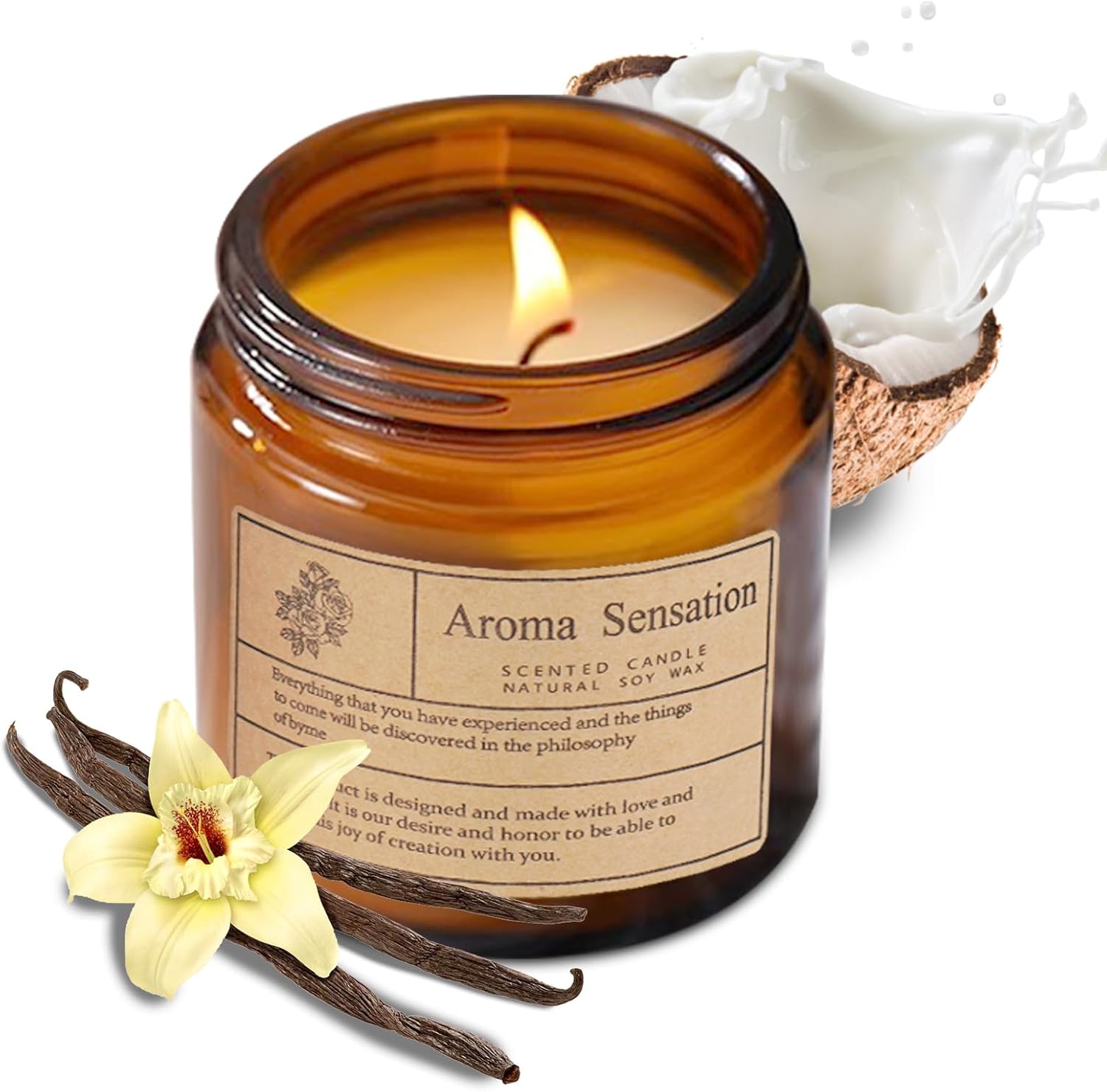
The scented everyday pick: Organic Coconut Vanilla Candles - Non Toxic Soy Candles for Home, Stress Relief & Meditation (7oz)
 Visit on Amazon →
Check current Amazon price. This is a 7-ounce soy candle scented with coconut and vanilla, sold as non toxic, and it is the format most people mean when they say they want a clean candle: small, scented, and built for a bedroom or a desk rather than a great room.
Coconut and vanilla is a sweet gourmand pairing, which is a polite way of saying it reads as dessert. Burned hot, that pairing tends to throw soft and warm rather than sharp, so treat it as a background scent for a closed room, not a candle you buy to fill an open floor plan. The 7-ounce size is the other thing to know going in. Small vessels have a shorter total burn life than a big jar, which is exactly why the wick care matters more here, not less. A 7-ounce candle with a mushroomed wick gives you a weak flame and a weak throw for its entire short life.
Flaws but not dealbreakers: It is a small candle. If you burn four hours a night, plan on replacing it sooner than you would a large jar. And if you do not want your bedroom smelling like a bakery, this is not your scent.
Anyone who wants a scented, non toxic candle for a small room and is willing to trim a wick before each burn will get along with this one.
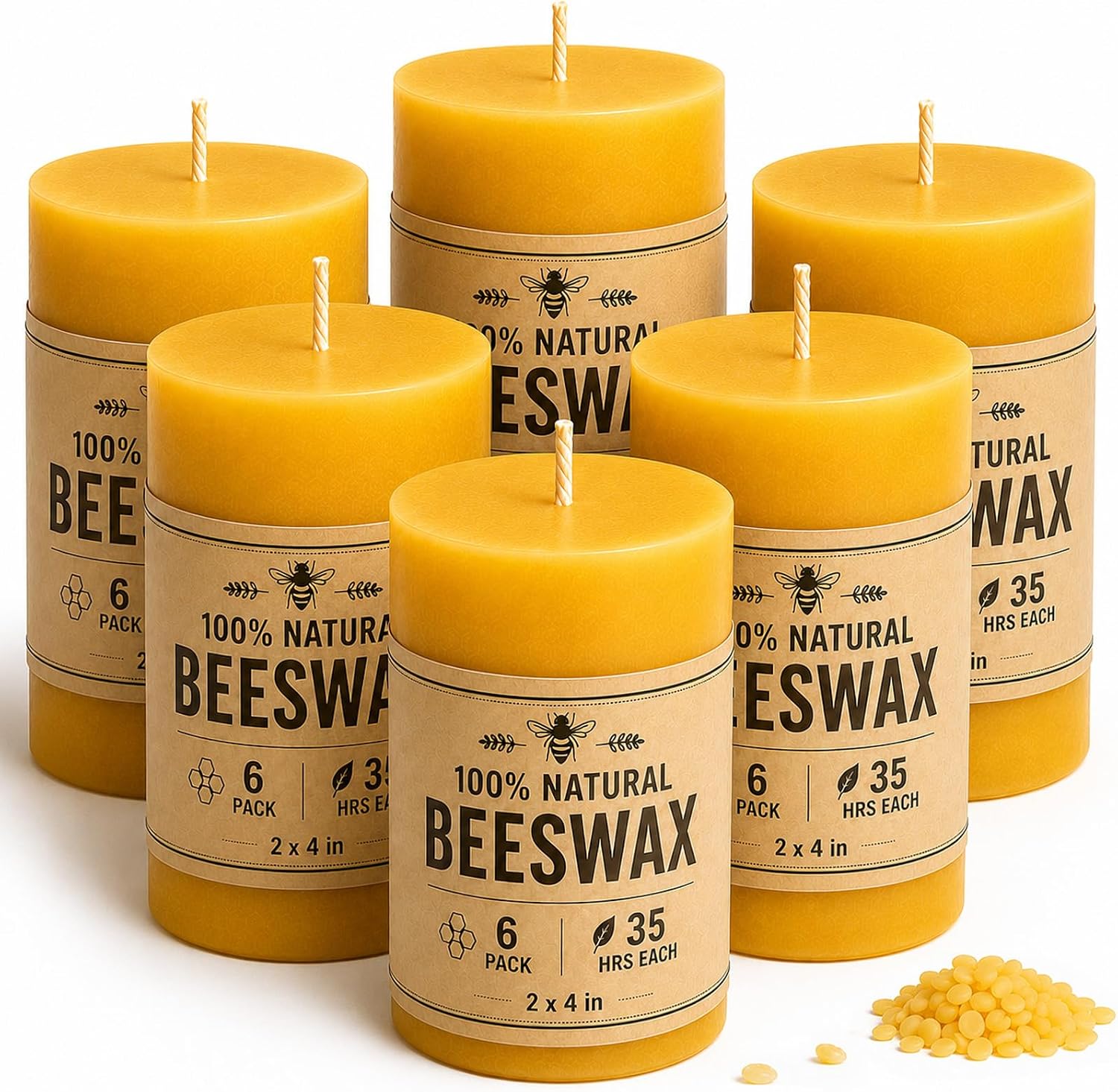
The pure wax pick: Beeswax Candles Non Toxic 6 Pack, Natural Beeswax Pillar Candle for Home
 Visit on Amazon →
Check current Amazon price. Beeswax pillars are the cleanest burn in my journal, and it is not close. There is no added fragrance oil to overload, no dye, and no mystery blend. What you smell is the wax: a light honey note that shows up when the pillar warms, not when you sniff it cold.
The catch is honest and worth saying out loud. Unfragranced beeswax throws gently. If you are used to a scented jar that announces itself from the doorway, a beeswax pillar will feel quiet. What you get in exchange is a slow, even, drip-resistant burn when the pillar is kept out of drafts and the wick is trimmed, plus a flame that behaves without sooting up a wall.
A six pack also changes how you burn. You are not nursing one candle for a month. You are setting pillars around the house, on a dinner table, in a bathroom, on a windowsill, and rotating them. Beeswax pillars want a proper holder with a spike or a snug cup, and they want a level surface. A pillar in a draft will drip and lean, and a leaning pillar is a wick problem waiting to happen.
Flaws but not dealbreakers: No added scent means light throw, and pure beeswax costs more per burn hour than a soy blend. If you want a candle that perfumes a room hard, this is the wrong tool.
Anyone who wants an unscented, non toxic candle for the dinner table, a bedroom, or a house with pets and kids should start here.
How to burn non toxic candles clean, step by step
This routine works on a scented soy jar and on a beeswax pillar. It takes about 20 seconds of prep per burn, and it is the difference between a candle that burns clean to the bottom and one that soots up its vessel by hour six.
Step one: trim the wick to a quarter inch. Every burn, every candle. Not an eighth of an inch, not a half inch. A quarter inch. I use kitchen scissors because I have used them for 20 years, but any wick trimmer or pair of nail scissors will do. An untrimmed wick mushrooms, the carbon ball eats your flame height, and the flame starts streaking soot down the side of the vessel. Most candle problems are wick problems, and most wick problems are trimming problems.
Step two: the first burn is the whole candle. Light it and leave it alone until the melt pool reaches the edge of the vessel. For a 7-ounce soy candle that is usually two to three hours. For a beeswax pillar it takes longer, and the pillar forms a soft shoulder rather than a full pool. If you blow it out at 45 minutes, you have taught the candle to tunnel, and it will tunnel for the rest of its life no matter what you do afterward.
Step three: cap every session at four hours. This is the rule I break and regret. Past four hours the wick gets long again, the melt pool overheats, the fragrance oil starts burning off instead of throwing, and you get soot. Blow it out, let it cool, trim, relight later if you want.
Step four: keep it out of moving air. Drafts from a ceiling fan, an HVAC vent, or an open window make the flame dance, and a dancing flame smokes. If your candle is flickering sideways, you have found the soot before it has found the jar.
Step five: snuff instead of blowing. Blowing sends a plume of smoke across the room and can push the wick off center. A snuffer or a lid does the same job with no smoke and leaves the wick where you left it.
Step six: recenter the wick while the wax is still soft. If the wick drifts toward one wall, that wall burns hot and the other side tunnels. A few seconds with a chopstick or a pencil after you snuff it fixes this for the next burn.
Step seven: store candles away from sun and heat. A soy candle that sits in direct sun will sweat fragrance oil and discolor. Beeswax will soften and lean. A closet or a cabinet keeps both out of trouble.
Step eight: stop at the last half inch. When the wax gets down to the bottom of a vessel or the pillar gets short, retire it. Burning the last inch is how wicks overheat and how glass cracks. Repurpose the vessel, keep the memory, buy another candle.
What the label does and does not tell you
Non toxic is not a regulated term. It is a marketing phrase, and it can sit on a candle that is genuinely simple, three ingredients and a cotton wick, or on a candle with a heavy fragrance load and a mystery blend. The fine print is where the truth lives, and most people never read it.
Fragrance oil is the variable most people miss. A candle can be soy, coconut, or beeswax and still smell like a cleaning product at hot throw because the fragrance load is too high. More oil does not mean better throw. Past a certain point the oil clogs the wick, the flame shrinks, and the candle soots. If a candle smells harsh and chemical at hour three, that is the fragrance load talking, not the wax.
Wick type matters as much as wax. Cotton, wood, and zinc-core wicks each behave differently, and a wick that is undersized for the vessel will tunnel no matter how clean the wax is. This is why I check the wick before I check the label. A candle is a wick delivery system, and everything else is packaging.
Soot alone is not proof of toxicity, and a clean burn is not proof of safety. Soot is proof that the wick was too long, the flame was dancing, or the fragrance load was too high. Fix the wick and the soot usually disappears. Ventilation matters too. Burning any candle in a sealed room for four hours concentrates whatever is coming off it, so crack a window when you can, and if you have asthma or a bird in the house, keep the session short and the room aired.
Finally, one myth worth retiring: the idea that a candle purifies your air. It does not. Clean-burning wax puts less into the air than a paraffin blend with too much oil, and that is the honest version of the claim.
The competition and why it lost
Paraffin-heavy jar candles are still the throw kings, and I will say that in every guide I write, but they are not what this article is about. If your priority is maximum scent distance for the money, a big paraffin jar wins and you should read a different piece.
Wood-wick candles are the other format people ask about. They crackle, they look great in photos, and they are unforgiving. A wood wick needs trimming to the same quarter inch, it needs the charred edge snapped off rather than cut, and it performs badly in a draft. If you are still learning the first-burn rule, start with cotton.
Tea lights and cheap votives are a third category and a different purchase. They are for a warm glow in a bathroom, not for throw, and the ones poured with a heavy fragrance load are the sootiest thing in my journal.
Candle warmer lamps are the honest alternative for anyone who cannot or will not burn a flame, and I recommend them for bedrooms and apartments with smoke detectors that hate you. They melt the top inch of a jar with no flame, no soot, and roughly triple the life of the wax. The trade-off is a gentler hot throw and no ritual, and they do not work on a tall beeswax pillar, because the wax sits too far from the bulb. Worth their own guide, not this one.
What this all costs
The only honest way to compare candles is price per burn hour, and you cannot do that math from a shelf tag alone. Here is the formula: take what you paid, divide it by the total hours the candle actually burned, and compare that number to the next candle instead of comparing the sticker.
A 7-ounce soy jar and a six pack of beeswax pillars sit at very different points on that math. The beeswax pillars carry a higher upfront cost for the pack, and in exchange you get an unscented, slow, clean burn and six separate candles to place around the house. The soy jar is the smaller commitment and the scented one. Check current Amazon price for the soy candle and check current Amazon price for the beeswax pack before you run the numbers, because the value only makes sense once you know what you are paying per hour.
Then add the tools. A wick trimmer or a decent pair of scissors, a snuffer, and a holder for the pillars. None of it is expensive and all of it outlasts the candles.
The math is the easy part. The 20 seconds of wick care before each burn is what separates a candle that smokes up its vessel by hour six from the same candle burning clean to the last half inch. Do it once, and you will never go back to a mushroomed wick.
That is the job. Your candle is wax, wick, and fragrance agreeing with each other. Give them the routine and they will.