I spent nine years in the pouring room of a contract candle factory outside Cincinnati, and the first thing the foreman taught me was to read the wax, then the wick, then the fragrance load, and only then the label. Everything printed on the jar after that is a sticker. That habit is why this candle warmer lamp vs scented candles comparison keeps circling back to burn hours instead of scent poetry: what stretches a jar, what burns it down, and which of these four products earns its shelf space in a small apartment.
The short answer, before the table: for most people the dimmable glass candle warmer lamp is the better buy, because it stretches wax you already own, removes soot and wick maintenance, and puts a timer on the whole operation. The three candles are not filler. They cover the jobs a warmer cannot do, which are gifting, instant mood, and a larger room that wants real hot throw.
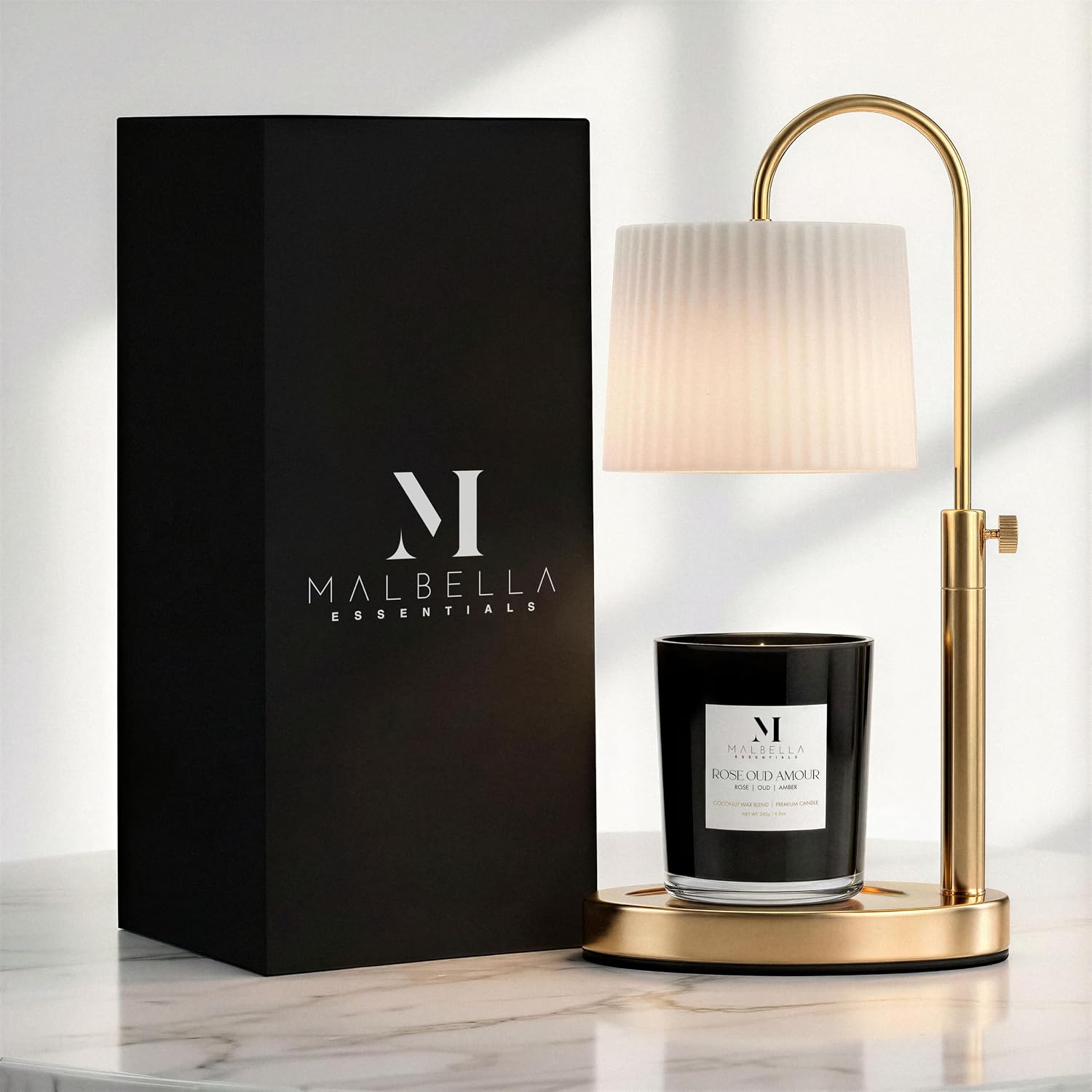
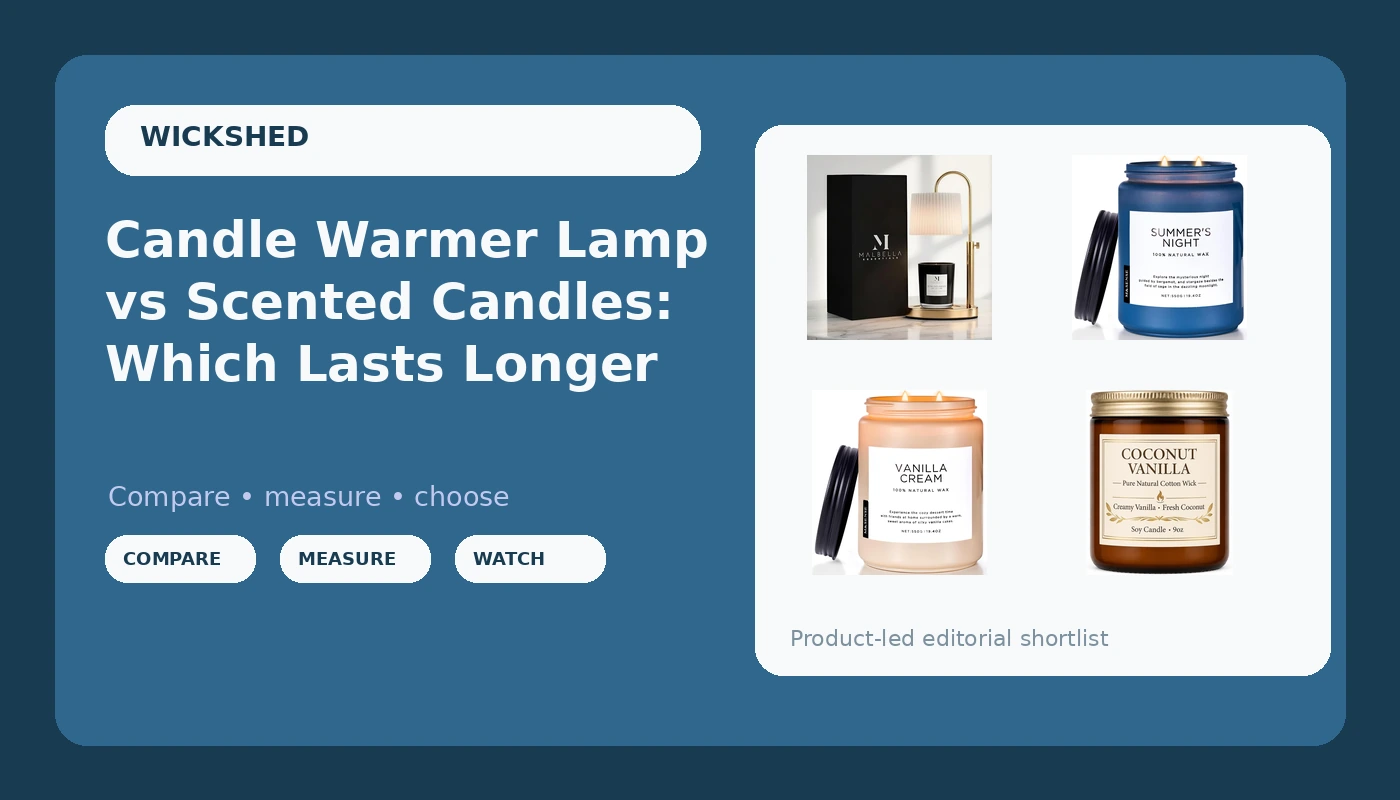
Dimmable Glass Candle Warmer Lamp with Timer (Gold Metal)
Melts the top inch of any jar with no flame, no soot, and no wick trimming, with 8H/4H/2H timer settings, dimmable output, and adjustable height
Hot throw is gentler than a flame, and it only works on jars that sit close enough to the bulb
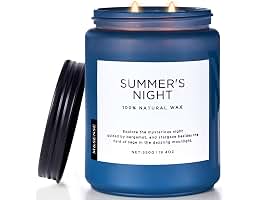
M&SENSE Summer's Night Scented Candle, 19.4 oz Soy Wax
A wide 19.4 oz soy jar, which means a wide melt pool and more throw per inch of wick
Large soy jars tunnel fast if the first burn is rushed, and the name is a mood rather than a note list
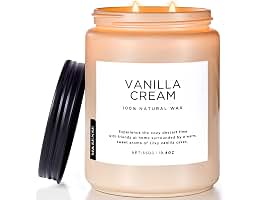
M&SENSE Large Vanilla Scented Candle, 19.4 oz Organic Soy Wax
Vanilla is the safest scent category in the business, and the 19.4 oz soy jar makes it a gift instead of an add-on
A single note can read flat at hot throw, so it works better as a base under another candle
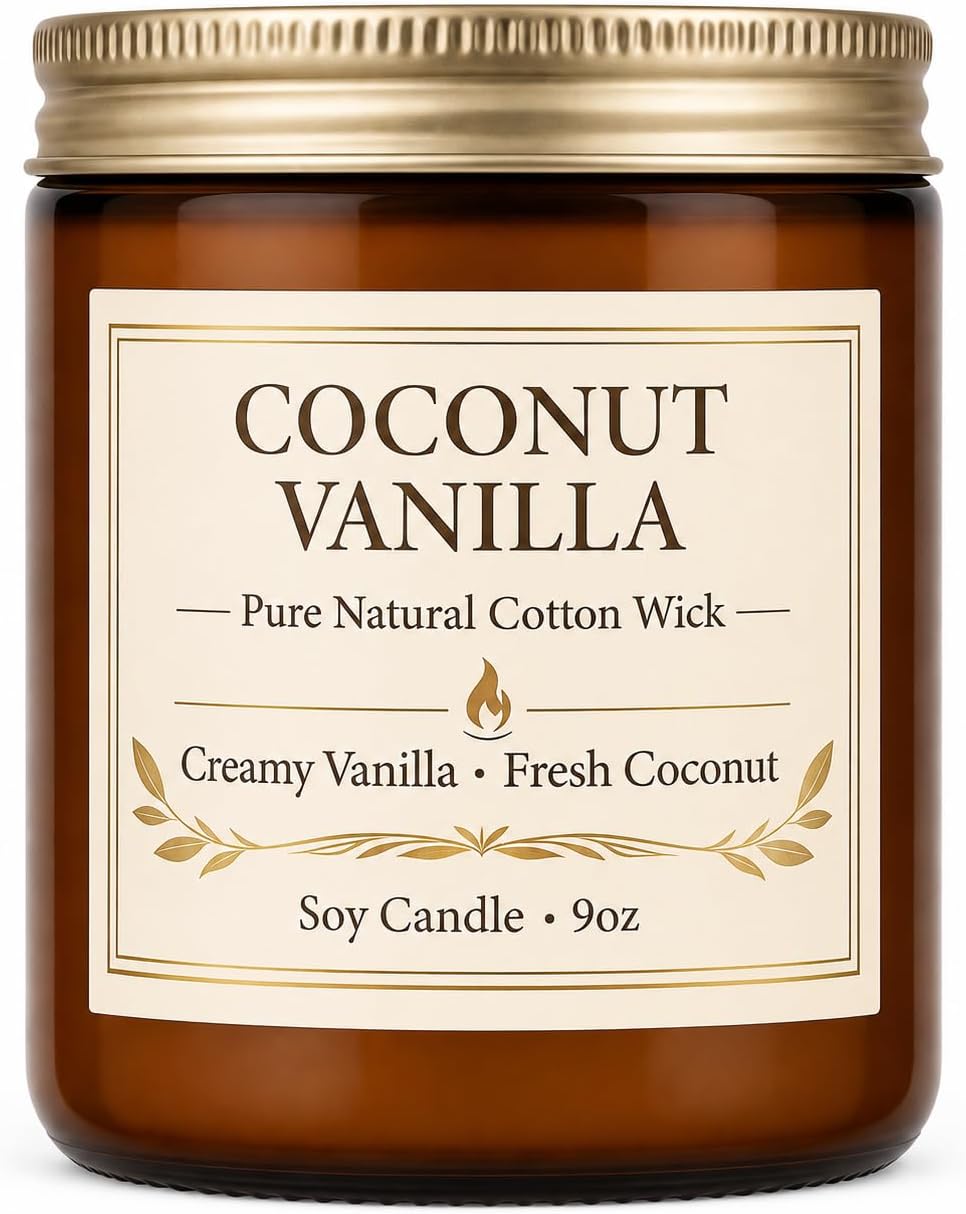
Coconut Vanilla Scented Candle, 9 oz Soy-Coconut Wax
The lowest-commitment way to test a scent family in a bedroom or bathroom, and a fast melt pool
Small jar, short life, and it will not carry a large open room
Prices and availability were captured from Amazon Creators API and may change.
What I checked before ranking these four
Every candle that earns a recommendation on this site has to survive my rules, and the rules are not complicated. Trim the wick to a quarter inch. Let the first burn run long enough for the melt pool to reach the edge of the jar, which usually takes two to three hours. Never burn past four hours in one sitting. Measure hot throw in a closed 12x12 room instead of trusting the sentence "fills the room," which is marketing until someone times it.
I have not logged these four to my usual 50-hour mark yet, so treat what follows as a spec-and-label comparison plus the first-burn plan I would run on each one. What I can verify is what the listings state: wax type, jar size, timer settings, and how the warmer is built. What I will not do is invent a number I have not measured.
What the wax tells you before you light anything
Three wax situations show up here: soy, soy-coconut, and whatever blend is already sitting in the jars on your shelf. Soy burns cooler and slower than paraffin, which is why it dominates the large-jar category, and it also throws more gently, which is why a soy jar in a big room can feel like it is whispering. Soy-coconut, the wax in the 9 oz jar here, carries a lower melt point, so it pools faster and releases scent earlier in the burn.
None of that makes soy automatically clean or paraffin automatically bad. The wick and the fragrance load matter more than the wax's reputation. A soy candle with an undersized wick tunnels and soots exactly like a cheap paraffin candle, and a paraffin candle with a well-matched wick burns cleaner than most people expect. When I read a listing I look for the wax type, the jar diameter, and the fragrance load, in that order. Two of the three are usually printed. The third almost never is, and that silence tells you something too.
The warmer lamp: the pick for jars you already love
A warmer does one thing a match cannot: it melts the top inch of wax without a flame, which means no soot streak down the glass, no mushroomed wick to trim, and no smoke detector deciding your evening for you. This unit is dimmable, which matters more than people expect, because the lowest setting is what you want for a small jar and the highest setting is what a wide 19-ounce jar needs. The 8H/4H/2H timer is the other feature I would pay for. Set it and the wax cools on its own, which is the honest answer for bedrooms and for anyone who falls asleep reading.
The adjustable height is the spec to check before you buy, and it is the reason I tell people to measure their tallest jar first. A warmer only works when the bulb sits close enough to the wax surface to melt it evenly. Tall pillars and deep tins sit too far from the bulb on a short lamp, and a warmer that runs too hot will cook the label off a jar you love. This lamp is built to fit various sizes of scented candles, and the gold metal base and glass shade mean it reads as a lamp rather than a gadget, which is why it works as a gift.
The trade-off is real: hot throw from a warmer is gentler than throw from a flame. You get the same scent, quieter, and the jar lasts roughly three times as long because you are melting the top layer instead of burning the column. If you want a room to announce itself the second you strike a match, this is not the tool. If you want one jar to last a whole winter, it is.
The two 19.4 oz jars: when size is the whole point
Visit on Amazon →
Visit on Amazon →
Nineteen and a half ounces is not a candle, it is a commitment, and both of these jars are that size for the same reason: a wide melt pool throws harder than a narrow one. The Summer's Night jar is the seasonal one, and the name is a mood rather than a note list, so read the fragrance notes on the listing before you commit. If it leans green or ozonic the way the name suggests, it is a spring and summer jar. If it leans warm, it will carry into fall. That is the honest limit of what a product name tells you.
The vanilla jar is the safe one, and I mean that as praise. Vanilla is the most useful scent in the category because it sits underneath almost everything else, which makes a large vanilla jar the best base note in a two-candle rotation. The listing calls it organic soy wax, and soy is the wax I would choose for a long, slow melt in a jar this size.
Here is the catch with any 19-ounce soy jar: it tunnels faster than anything else on the shelf if you rush the first burn. A wick sized for a smaller diameter burns a hole down the middle and leaves a wall of wax standing, and once that happens you chase it for the rest of the jar's life. Give the first light three hours. If the melt pool has not reached within a quarter inch of the glass by the end of it, move the jar under the warmer and let the lamp finish what the wick started.
The 9 oz coconut vanilla jar: small rooms and cheap experiments
Nine ounces of soy-coconut wax is the jar I would hand someone who wants to know whether they actually like coconut in a candle before buying a 19-ounce version of it. Soy-coconut blends melt at a lower temperature than straight soy, which means the wax pools quickly and the scent arrives sooner, and it also means the jar runs out sooner. That is the trade: fast, friendly throw in a small space, shorter life.
This is a bedroom, bathroom, or desk jar. It is also the one I would tuck into a gift basket, because it is the easiest size to finish, and a candle that gets finished is a candle that gets repurchased. If you are pairing it with the lamp, 9 ounces is close to the ideal size for a warmer, since the bulb sits within a reasonable distance of the wax without any height gymnastics.
Where the warmer wins, and where a flame still wins
Warmer wins: apartments with sensitive smoke detectors, bedrooms, homes with cats that investigate anything flickering, and any jar you want to stretch. It also wins on maintenance. No trimming, no soot streaks, no mushrooming, and no tunneling in the usual sense, because the melt pool forms from the top down and there is no wick channel to dig.
Flame wins: the ritual, the crackle if you burn wood wicks, the stronger hot throw in a large room, and every candle that was never meant to sit under a bulb. Pillars are the clearest case. A three-inch pillar cannot be warmed evenly because the bulb cannot reach the wax surface, and a pillar is also the one candle a warmer can never replace.
The practical answer for most homes is not either/or. Buy the lamp, keep the candles, and decide per jar. That is how I run it. The lamp handles weeknight burns and the jars I want to last, and the matches come out when the house is full and I want the room to smell like something within ten minutes.
Who should buy which
- Buy the warmer lamp if you already own more candles than you can burn, or if you want candlelight in a room where an open flame is a bad idea. It is the only product here that makes the other three last longer.
- Buy the large vanilla jar if you need one gift that will not miss. Vanilla is the safest scent category in the business, and the size makes it feel like a present instead of an afterthought.
- Buy the Summer's Night jar if you want a seasonal mood and you are willing to read the note list before you order.
- Buy the 9 oz coconut vanilla jar if you want a low-commitment test in a scent family you have not tried, or a hostess gift that fits a small budget.
The setup I would actually build: the warmer plus one large jar, with the 9-ounce jar as the rotating scent on top. That is a winter of evening scent, and the wax lasts because the lamp never burns it off.
What I am logging next
The first jar going under the lamp is the large vanilla, because it is the easiest one to judge. If a vanilla candle cannot throw, the blend is wrong and no amount of wicking will save it. The Summer's Night jar goes into the closed 12x12 room for a proper hour-one and hour-three reading. The 9 oz coconut vanilla goes on the nightstand, where small jars belong.
I will log flame height on the ones that get a wick, and wax temperature and time-to-pool on the ones that get the lamp. The journal does not care which method you use. It only cares that you wrote it down.