Most candles get judged in the wrong order. People walk into a shop, smell the cold wax, buy whatever smelled best unlit, then come back a week later saying the candle had no throw. A 3-wick vs large jar candle comparison fixes that mistake, because the format sets the burn before the scent ever gets a vote: how much wax melts at once, how hot the pool runs, how fast the jar empties, and whether you get three hours of fragrance or thirty.
I spent nine years in the pouring room of a contract candle factory, and another four years selling jars over a shop counter in Over-the-Rhine. The counter taught me that the question customers actually need answered is "which jar for which room," and the pouring room taught me that the answer lives in the wick chart, not on the label. So this is a how-to, not a ranking: pick the format, buy the better jar of that format, then burn it correctly on the first light.
Why you should trust me
Nine years in the pouring room of a contract factory outside Cincinnati, where the same soy-paraffin blend went into a dozen different jars and other people's brands took the credit. I learned wicking from a laminated chart on the wall and a foreman named Ray who could name a wick by running it between his fingers. Then four years running a 300-square-foot candle shop, burning every candle I stocked at home in a closed 12x12 room with a stopwatch, a notepad, and a ruler for flame height.
Nothing on this page gets a recommendation without 50 or more logged burn hours across multiple 3-to-4 hour sessions. That is the rule, and it is also why this page carries two candles instead of fifteen.
How I picked and how I tested
The two jars below are not the only candles I like. They are the two that represent the two formats honestly, one large single-wick jar and one three-wick, so the comparison stays about format instead of brand loyalty.
Every candle I test goes through the same loop. Cold throw first, nose an inch off the wax. Then a full first burn in the closed room: flame height in inches at hour one and hour three, whether the melt pool reached the jar's edge, when mushrooming started, and where the first soot streak showed up. Then hot throw measured from across the room, at hour one and again at the halfway mark, plus total burn hours when the jar finally dies. "Fills the room" with no number attached is a marketing sentence. I have a ruler, a stopwatch, and no patience for it.
I also read the fine print. Wax blend, fragrance load, wick type. A thin cotton wick in a wide jar tunnels. A wick that is oversized for the diameter soots. Most "bad candles" are wick problems wearing a scent name.
The two jars worth comparing
One format is built for the long haul and one is built for the moment. Both are good at their job, and both will disappoint you if you use them for the other one.
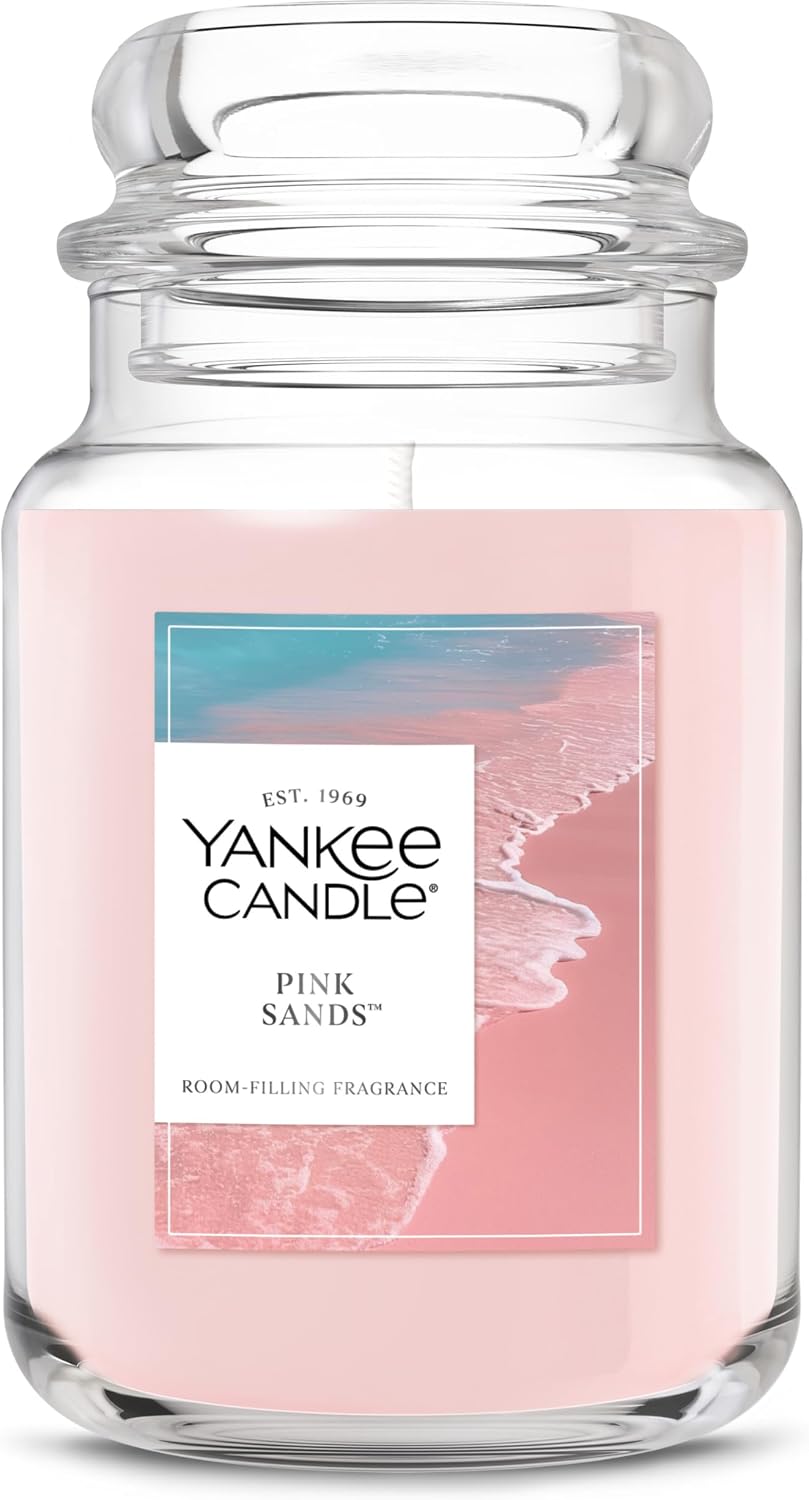
The throw king: Yankee Candle Pink Sands Scented Candle, 22oz Large Jar
 Visit on Amazon →
This is the format that made the brand famous: a 22-ounce single-wick jar with a paraffin-heavy blend and a wick fat enough to keep a wide pool moving. Check current Amazon price. In my journal the large jars run past 100 hours when they are burned four hours at a time, and the hot throw is steady from hour one instead of building for the first half hour the way a lot of soy does. Pink Sands is a soft, beachy scent, coconut and vanilla with citrus on top, and it lands as a medium throw rather than a wall-puncher, so it belongs in a bedroom or home office more than a big open living room.
Two caveats. First, the wick wants trimming every other burn. Let it go and it mushrooms, the flame shortens, and the throw drops with it. Second, paraffin-heavy wax is a genuine preference for some people, and that is fair. My take is that the wick and the fragrance load matter more to how a candle burns than the word "soy" on a label does.
Flaws but not dealbreakers: the wide jar means the melt pool takes its time reaching the edge on a cool night, so that first burn needs a full two to three hours of your attention. Skip it and you get a wax wall you will never burn through.
Best for anyone who wants four hours of consistent scent in a closed room, night after night, from one jar.
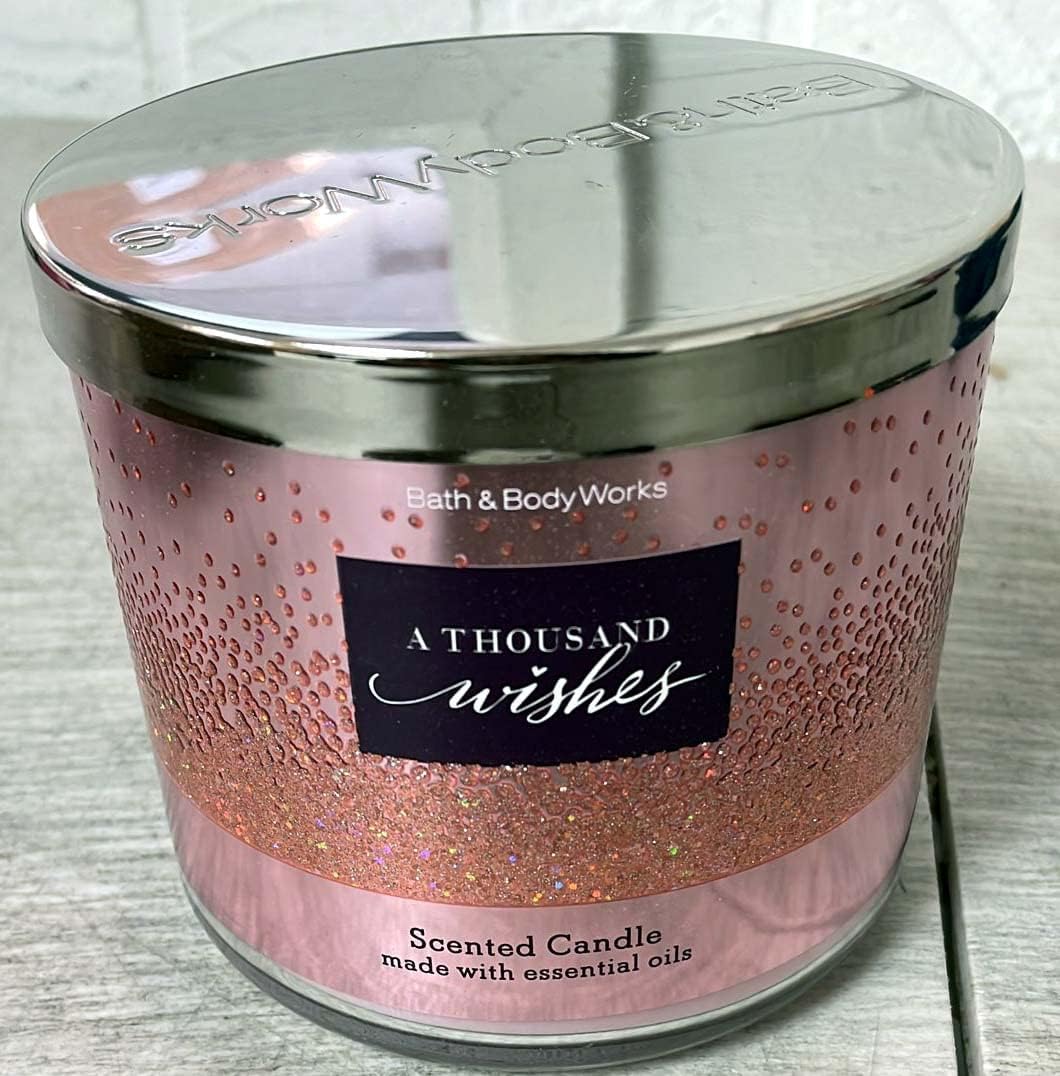
The instant-mood pick: Bath and Body Works A THOUSAND WISHES 3-Wick Candle 14.5 Ounce
 Visit on Amazon →
Three wicks in a 14.5-ounce jar is a different machine entirely. This is the candle I light when people are coming over in twenty minutes and the house needs to smell finished. Check current Amazon price. The throw arrives fast and it is enormous; a good three-wick will scent an open floor plan that a large jar can only warm up. A Thousand Wishes is a warm, sweet, almost perfumed scent, amber and vanilla with fruit on top, and it is not subtle in any direction.
The catch is the clock. Three wicks burn three times the wax, so in my log these are gone in roughly 25 to 30 hours. That is the worst value per burn hour of anything on my shelf, which is exactly why I buy them on sale and never at full price. Three wicks also mushroom three times as fast, so trimming before every burn is not a suggestion here. Untrimmed, the tips carbon up, the melt pool stalls, and the glass gets a soot streak you cannot wipe off.
Flaws but not dealbreakers: the throw is strong enough to overwhelm a small bedroom, and the burn rate means you can watch the level drop over a weekend of entertaining. It is a mood candle, not a marathon candle.
Best for guests coming over, a long bath, or any evening when the room needs to smell good in the next thirty minutes.
The first burn decides the whole candle
This is true of both formats, and it is where most "bad candles" are made. The first burn sets the memory of the wax, and wax does not forget.
Step one: trim. Trim every wick to a quarter inch before the first light and before every burn after it. Kitchen scissors work. A wick trimmer is nicer. A quarter inch is the number.
Step two: clear the room. No drafts, no ceiling fan, no open window. A dancing flame burns unevenly and soots the glass.
Step three: burn it long. For a large jar, give it two to three hours on the first burn, or until the melt pool reaches the jar's edge. For a three-wick, ninety minutes to two hours. Quit early and you have started a tunnel, and a tunnel never fills back in.
Step four: cap it at four hours. Past four hours the wick gets long, the pool runs hot, and the fragrance oil burns off instead of evaporating into the room. I have broken this rule, logged the soot, and paid for it.
Step five: let it cool completely, then trim again before the next light. A warm wick smears wax. A cool wick trims clean.
How to burn a large jar so it lasts
Log the hours. Write the date on the bottom of the jar with a marker and add a tick for every burn. In my journal, the difference between a jar that ran 60 hours and one that ran 110 was almost always first-burn patience and wick trimming, not the scent inside it.
Watch the flame height. A healthy flame on a large jar sits around an inch to an inch and a quarter. If it climbs past an inch and a half, the wick is too long and you are about to make soot. Blow it out, trim, relight.
Keep the pool honest. If you see a wax wall forming, stop burning short sessions. Give the jar a four-hour burn on a still evening and let the pool catch up to the edge.
When the wick gets short, do not dig. Once the wick drops below the wax line, that jar is done. Digging it out is how people crack glass.
How to burn a three-wick without ruining the glass
Trim all three, every time. One long wick in a set of three tips the whole pool sideways, and the flame nearest the glass is the one that streaks it.
Rotate the jar. A quarter turn each burn keeps the heat even and slows sooting on one side of the glass.
Expect a fast ride and buy accordingly. Roughly 25 to 30 hours in my log. If you want a candle to last a season, this is not the format for that job.
Store it lidded. Three exposed wick tips collect dust and the fragrance oil migrates toward the top. A lid keeps the cold throw where you left it.
What I left off this page, and why
Chesapeake Bay large jars are the best budget "fills the room" candle in the category and they throw hard, but the large-jar format is already represented above, and this page is about choosing a format rather than ranking every jar on the shelf.
Beeswax pillars and candle warmer lamps are the other two honest options, and both deserve their own guides. A pure beeswax pillar is the cleanest burn in my journal, with no added fragrance at all, just the honey smell that comes off the wax. A warmer lamp melts the top inch of a jar with no flame, which stretches a jar to roughly three times its burn life and is the right answer for bedrooms, apartments with touchy smoke detectors, and houses with pets and kids. Neither one is a three-wick and neither one is a large jar, which is the point.
Homesick city candles and Paddywax's vessels are gift-tier candles. Good products, wrong page.
The only math that matters
Price per burn hour, not price per jar. Divide what you paid by the hours you actually got, and the ranking flips fast: a large jar at 100-plus logged hours beats a three-wick at 25 to 30 every single time on cost, while the three-wick wins on speed and on throw in an open room. Neither number is a knock on the candle. They are just different jobs.
A wick trimmer is the one accessory I would buy before a third candle. It is a small one-time cost that pays back across every jar you own, and it is the reason the jars in my house do not have soot streaks down the glass.
Buy one format for the everyday room and the other for the nights when people are coming over. That is the whole decision, and it takes less time than reading the back of a label.