Most scented jar candles never get a fair first burn. Someone lights one at 8 p.m., blows it out at 8:45, and by the third night the flame is drilling a tunnel straight down the middle while the outer wall of wax stands untouched. That candle is not defective. It was never given the two hours it needed.
I spent nine years in the pouring room of a contract candle factory outside Cincinnati, where we poured the same soy-paraffin blend into a dozen different jars and let other people's brands take the credit. The lesson that stuck with me is simple: a candle is a wax, a wick, and a fragrance load that have to agree with each other, and the label is the last thing you should read. Learning how to burn scented jar candles properly comes down to the wick and the first burn, not the price tag on the glass.
The steps below are the same ones I used behind the counter at the WickShed, and the same ones in the burn journal I still keep: a closed 12x12 room, a stopwatch, a ruler for flame height, and a note for soot. It takes one evening to learn and it changes every jar you buy afterward.
Why you should trust me
Nine years in a pouring room taught me wicking from a laminated chart on the wall and a foreman named Ray who could identify a wick by running it between his fingers. Four years behind a shop counter taught me which jar a customer actually buys and which one gets sniffed and put back on the shelf. The storefront is gone. The burn journal outlived it.
Every candle I recommend has 50 or more logged burn hours behind it, across multiple three to four hour sessions, in a closed 12x12 room with the door shut and the HVAC off. My rules are boring and I do not break them: no "fills the room" without a hot throw distance measured in that room, no wax claim without reading the fine print for fragrance load and additives, and no wick claim without checking the wick type against the jar diameter. If a site tells you a candle "smells expensive," close the tab. That is not a measurement.
How I picked and how I tested
The two jars below are here because they do the two different jobs most people actually have: one candle for a room you sit in every night, and one set for a person whose taste you cannot guess. I judged both on the same checklist I run on every candle.
The fine print comes first. What is the wax blend, and what is the fragrance load? More fragrance oil is not better. Overloading a jar makes it soot and smell like a cleaning product. Then the wick: cotton, wood, or zinc-core, and does its size match the jar diameter? A wick that is one size small will tunnel no matter how patient you are. Then the cold throw, nose an inch from the wax, which is the cheapest and least honest way to judge a candle. Then the first burn, watching whether the melt pool reaches the glass within two to three hours. Then the hot throw at hour one, and again at the halfway mark. Then a soot and mushrooming check at hour four. Finally, total burn hours divided by price, which is the only honest comparison in this category.
One note on numbers. I will not print a price that changes every week or a measurement I did not take. Check current Amazon price on the listing, and run the checks yourself. That is the whole method, and it works on a jar you already own.
Two jars worth starting with
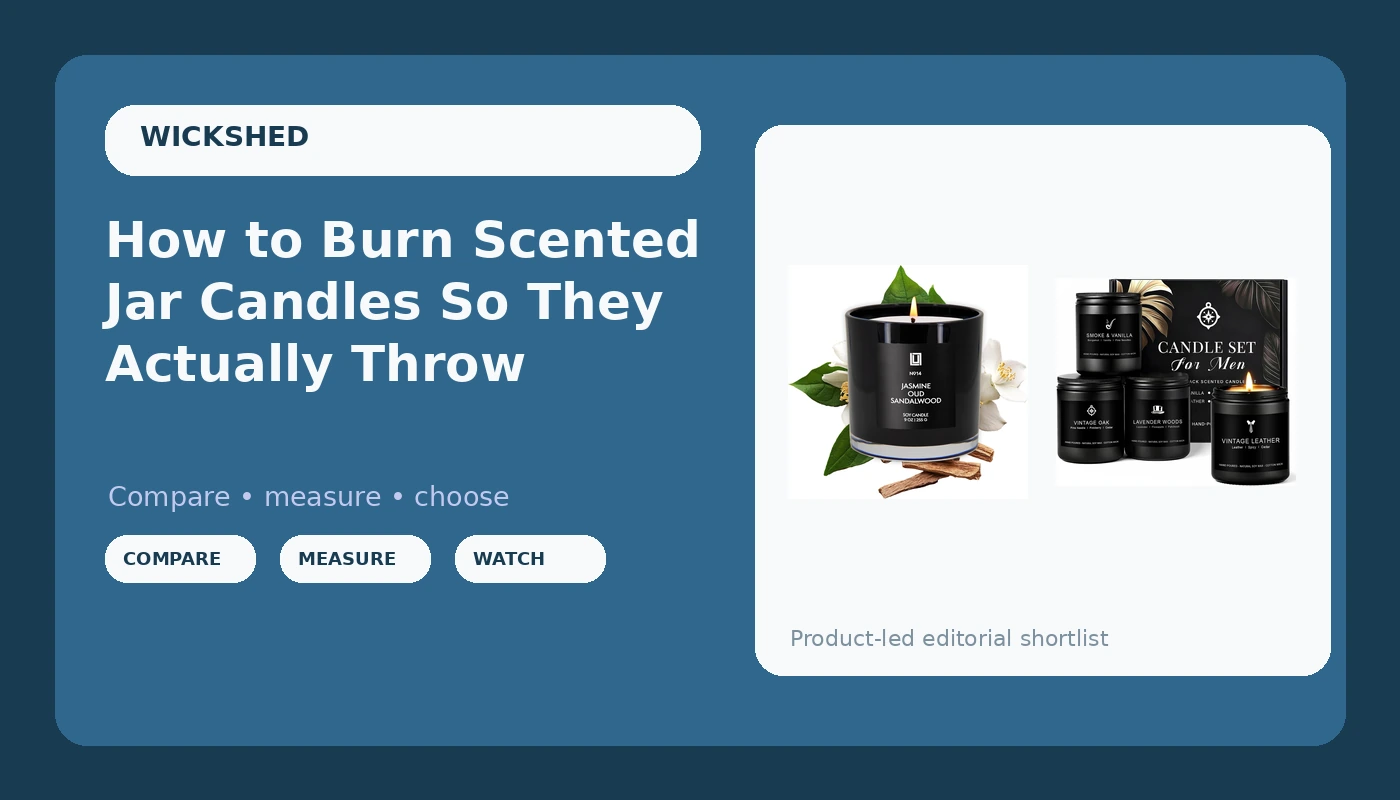
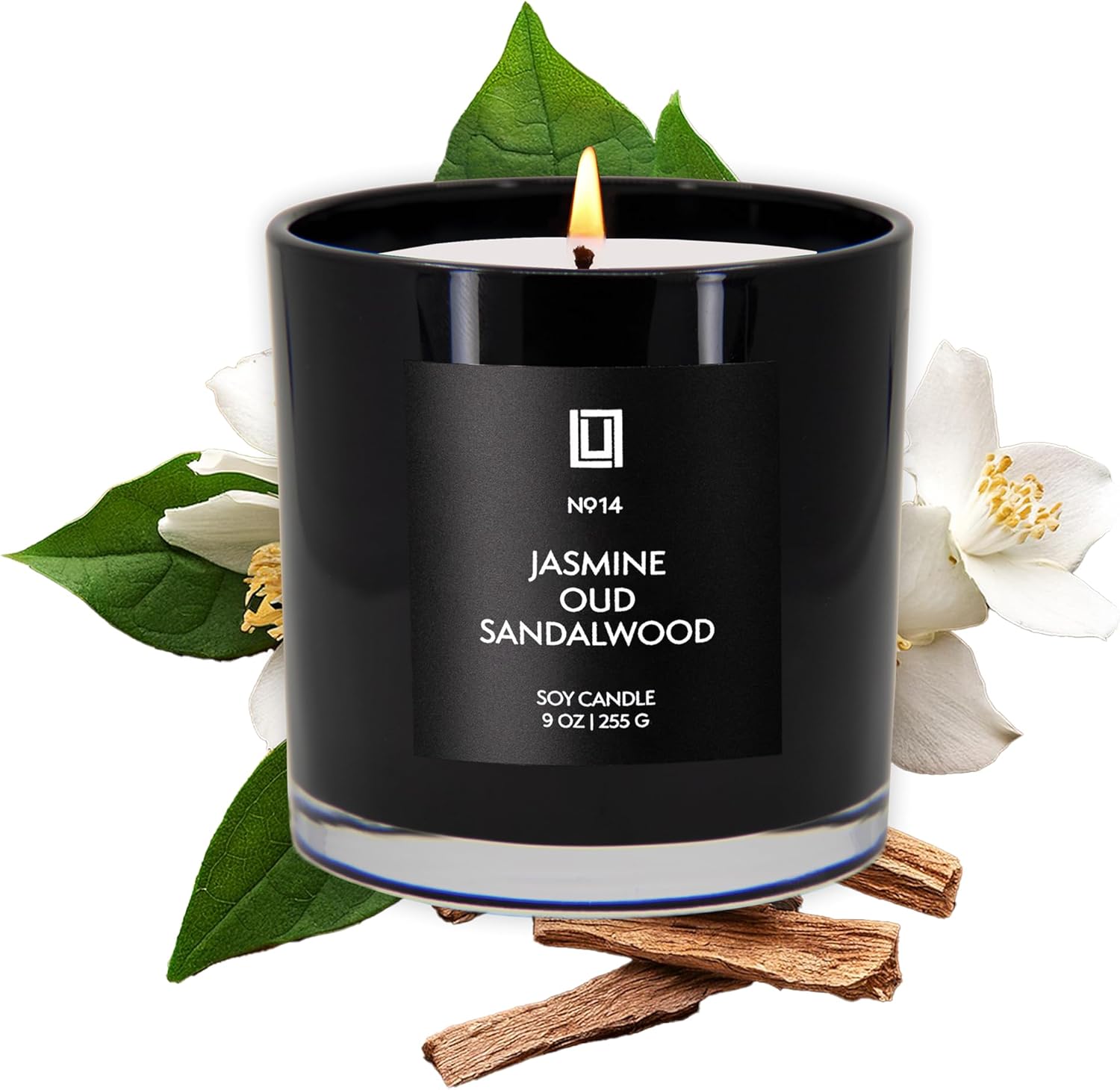
The everyday jar: Lulu Candles Jasmine, Oud & Sandalwood Scented Soy Blend Jar Candle, 9 Oz.
 Visit on Amazon →
Nine ounces is the size I point people toward first, because it is big enough to reach a full melt pool without asking for a four hour commitment. This one is a soy blend in a glass jar, and the scent is the three-note combination in the name: jasmine up top, oud in the middle, sandalwood holding the base.
That structure matters for how you burn it. Floral and wood notes are the ones that change most between cold and hot. Cold, the jasmine reads sharp and almost soapy off the wax. Hot, the oud and sandalwood come forward and the whole thing gets warmer and darker. A three-note blend like this only opens up once the melt pool is wide, which means the first burn is not optional. Trim to a quarter inch, light it, and leave it alone until the wax touches the glass. If you quit early, you will spend the rest of the jar burning the top note only.
Soy blends also tend to run a slightly softer pool than a paraffin-heavy jar, so keep it out of a draft. A ceiling fan on low will push the flame sideways and give you an uneven pool and a soot streak on one side of the glass. Check current Amazon price before you buy, then give it the two hours it deserves.
Flaws but not dealbreakers: Soy blends can look slightly uneven on the surface after they cool, and that is normal, not a defect. Do not judge the jar by a rough top after a burn.
The gift set: Scentes Candles Set for Men, 4 Pack Mens Masculine Soy Candles
 Visit on Amazon →
A four pack solves the problem that a single jar cannot: taste. When you do not know whether someone wants leather and smoke or cedar and citrus, four smaller soy candles give you four chances instead of one, and the person gets to find out which one they actually reach for.
Sets like this usually run smaller in diameter than a 9 oz single jar, and that changes the burn plan in one specific way. A narrower jar reaches its melt pool faster, so a first burn of an hour and a half can be enough to get the wax to the glass. The rule does not change, only the clock. Watch the pool, not the time, and stop when the melted wax meets the edge.
Because a set spreads its attention across four jars, the checklist matters more, not less. Read the fine print for the wax blend and the fragrance load, check that the wick size matches the smaller diameter, and burn one before you hand over the box. If the first one mushrooms at two hours, you know to trim more aggressively on the other three. Check current Amazon price on the set, and remember that four jars at a set price usually beat one jar at the same money in gift situations.
Flaws but not dealbreakers: Masculine-leaning sets skew woody and smoky, which some people read as heavy in a small bedroom. Burn one in the room before you commit the whole set to it.
The first-burn workflow, step by step
This works on any jar candle. It does not care about the brand on the glass.
Step one: trim the wick to a quarter inch. Kitchen scissors are fine. A wick trimmer is nicer, but the length is what matters, not the tool. An untrimmed wick mushrooms, and a mushroomed wick kills your flame height and your throw before the candle has done anything wrong.
Step two: pick the surface. Level, heat safe, and out of the path of a draft. A windowsill in September is a draft. A coffee table under a ceiling fan is a draft. Drafts cause uneven pools and soot streaks.
Step three: light it and walk away for two to three hours. This is the part everyone fails. The melt pool needs to reach the glass edge on the first burn, or the candle will tunnel for the rest of its life. You cannot fix a first burn later.
Step four: watch the pool, not the clock. If the wax reaches the edge in an hour and forty minutes, you are done. If it takes three hours, give it three. Wider jars take longer. Narrow jars take less.
Step five: cap every session at four hours. Longer than that and the wick starts to drift, the fragrance oil burns off faster than it should, and you get soot on the glass. I have broken this rule exactly once, during a show binge, and I logged the soot streak as penance.
Step six: snuff, do not blow. Blowing sends a puff of soot across the wax and can push the wick off center. A snuffer or a wick dipper is a few dollars and worth it.
Step seven: trim again before the next burn. Every burn, not every other burn. The wick does not heal.
Step eight: log it once. Date, flame height at hour one, whether the pool reached the glass, any mushrooming, any soot. Two lines in a notebook. After five candles you will start predicting jars before you light them, and that is when you stop wasting money.
The four problems you will actually hit
Tunneling. A hole down the middle with standing wax walls. Almost always the first burn's fault, and almost always the wick's fault underneath that. If a jar tunnels anyway, wrap the top in foil with a hole over the wick and burn it for two hours to reset the pool. It works more often than it should.
Mushrooming. The carbon ball on the wick tip. It dims the flame, weakens the throw, and flakes soot into the wax. Trim it. If it comes back within an hour of a fresh quarter inch trim, your wick is oversized for the jar.
Soot streaks. Black lines up the glass. Causes, in order of likelihood: untrimmed wick, draft, burn session over four hours, or a fragrance load too high for the wick to handle. Fix the first three before you blame the candle.
Weak hot throw. Before you give up on a jar, check the obvious. Is the room closed? Is the wick trimmed? Has the melt pool reached the edge? A candle that never pooled will throw at maybe half of what it can do. And give it an hour. The first twenty minutes prove nothing.
If you cannot have a flame
A warmer lamp melts the top inch of a jar with a bulb instead of a wick, which means no soot, no mushrooming, and a jar that lasts roughly three times as long. The trade off is real: the hot throw is gentler than a flame, and you lose the ritual.
Two cautions before you trust a warmer with anything you love. Thick pillars and tall tins sit too far from the bulb to melt properly, and a cheap warmer can scorch the label off an expensive jar. Check the height adjustment first. For bedrooms, rentals with smoke detectors that hate you, and anyone with pets or kids, fragrance without fire is a real category, not a compromise.
What this all costs
The math here is not about the sticker on the jar. It is cost per burn hour. Take the price, divide it by the burn hours you actually get, and compare that number across jars. A jar that burns clean for 60 hours at a mid price beats a cheap one that soots up the glass by hour six and gets thrown out at hour twenty.
For the two picks above, check current Amazon price on each listing and do that division yourself with the burn hours you log. The Lulu jar at 9 oz is the single-candle math. The Scentes set is the four-jar math, and sets usually win on cost per hour because the jars are smaller and the price is spread across four of them.
The free part is the part that decides everything. A quarter-inch trim, a level surface, no draft, and two to three hours on the first burn cost nothing and add burn hours to every jar you will ever buy.
The short version
Trim to a quarter inch. Keep it out of a draft. Let the first burn run until the melt pool touches the glass, which takes two to three hours on a 9 oz jar and a bit less on a smaller one. Cap every session at four hours. Snuff it, trim it again before the next burn, and write two lines in a notebook.
Do that and the jar stops being a gamble. Most "bad candles" were never bad candles. They were bad first burns, and the fix costs nothing but patience.