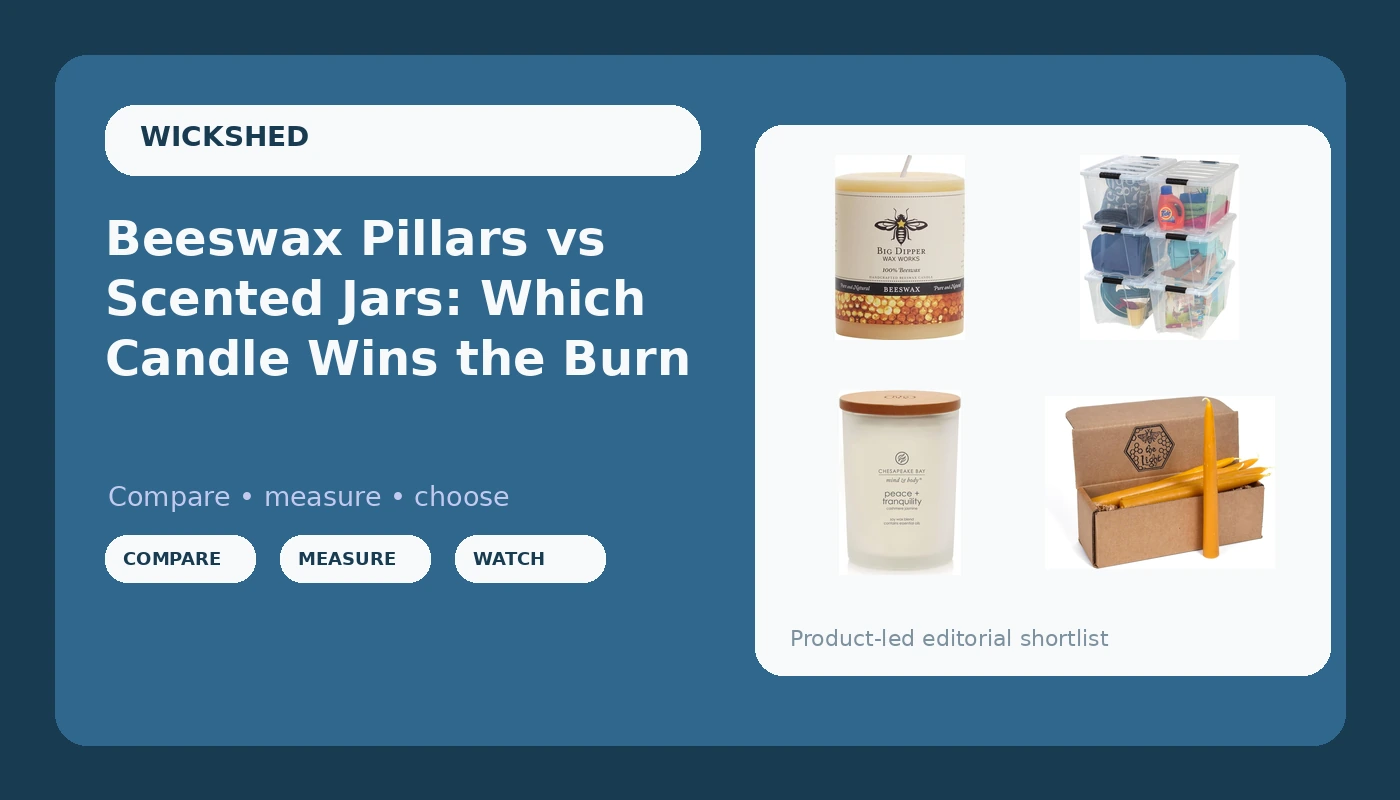
I spent nine years in the pouring room of a contract candle factory outside Cincinnati, watching the same soy-paraffin blend go into a dozen different jars so other brands could take the credit. The laminated wick chart from that pour room still hangs over my desk, and the burn journal from the shop I opened on the edge of Over-the-Rhine outlived the shop itself. So when readers ask me about beeswax vs scented candles, I answer the way I answered customers at the counter: those are two different products wearing the same word, and which one you want depends on whether you are buying a scent or a burn.
The short answer: if you want a room to smell like something, buy a scented jar. If you want a flame that behaves itself for hours and smells like honey and almost nothing else, buy 100% beeswax. Most households should own one of each, plus something to keep the off-season stash out of the light.
Here is the four-item short list I keep coming back to: one scented jar, one beeswax pillar, one box of beeswax tapers, and the unglamorous storage that keeps the rest of it good.
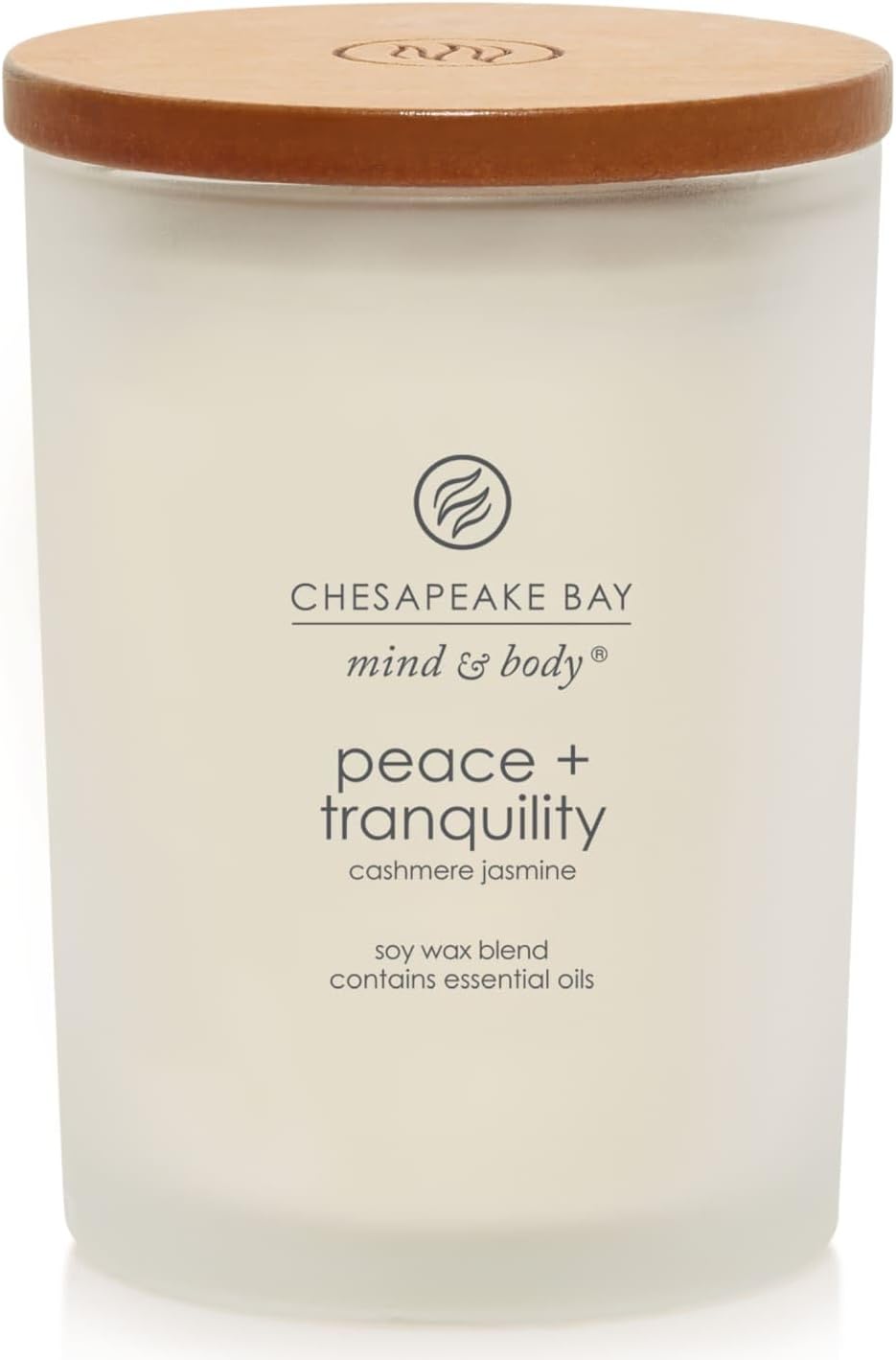
Chesapeake Bay Candle Mind & Body Collection Scented Candle, 8.8oz
The format I hand people who want a scented room without committing to a giant jar
8.8 ounces is small, so one bad first burn costs you a real share of the wax
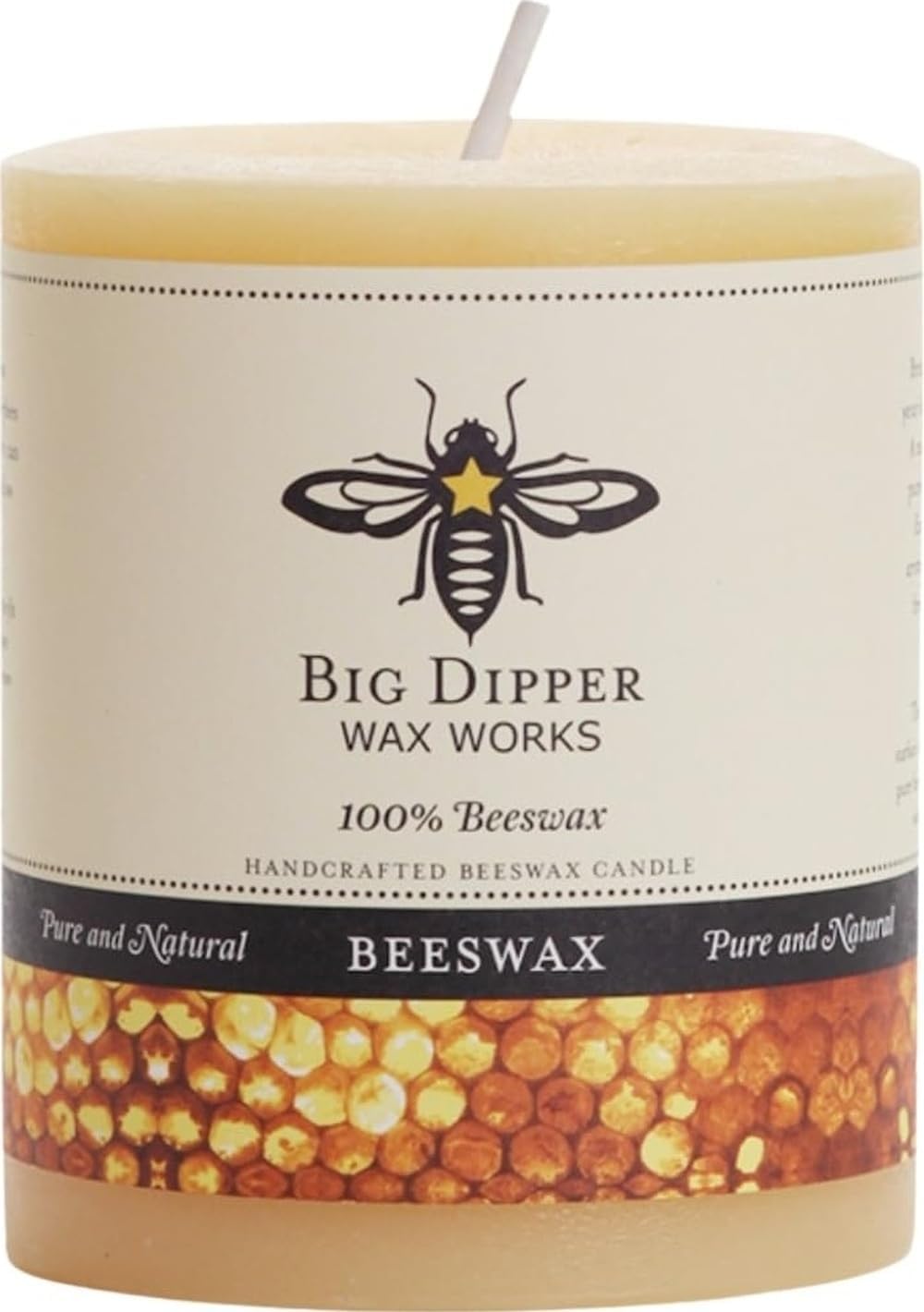
Big Dipper Wax Works 100% Beeswax Pillar Candle, 3 x 3.5 in, Natural
100% beeswax with no added fragrance, so the honey smell is the wax talking
No throw to speak of, and a pillar punishes an untrimmed wick faster than a jar does
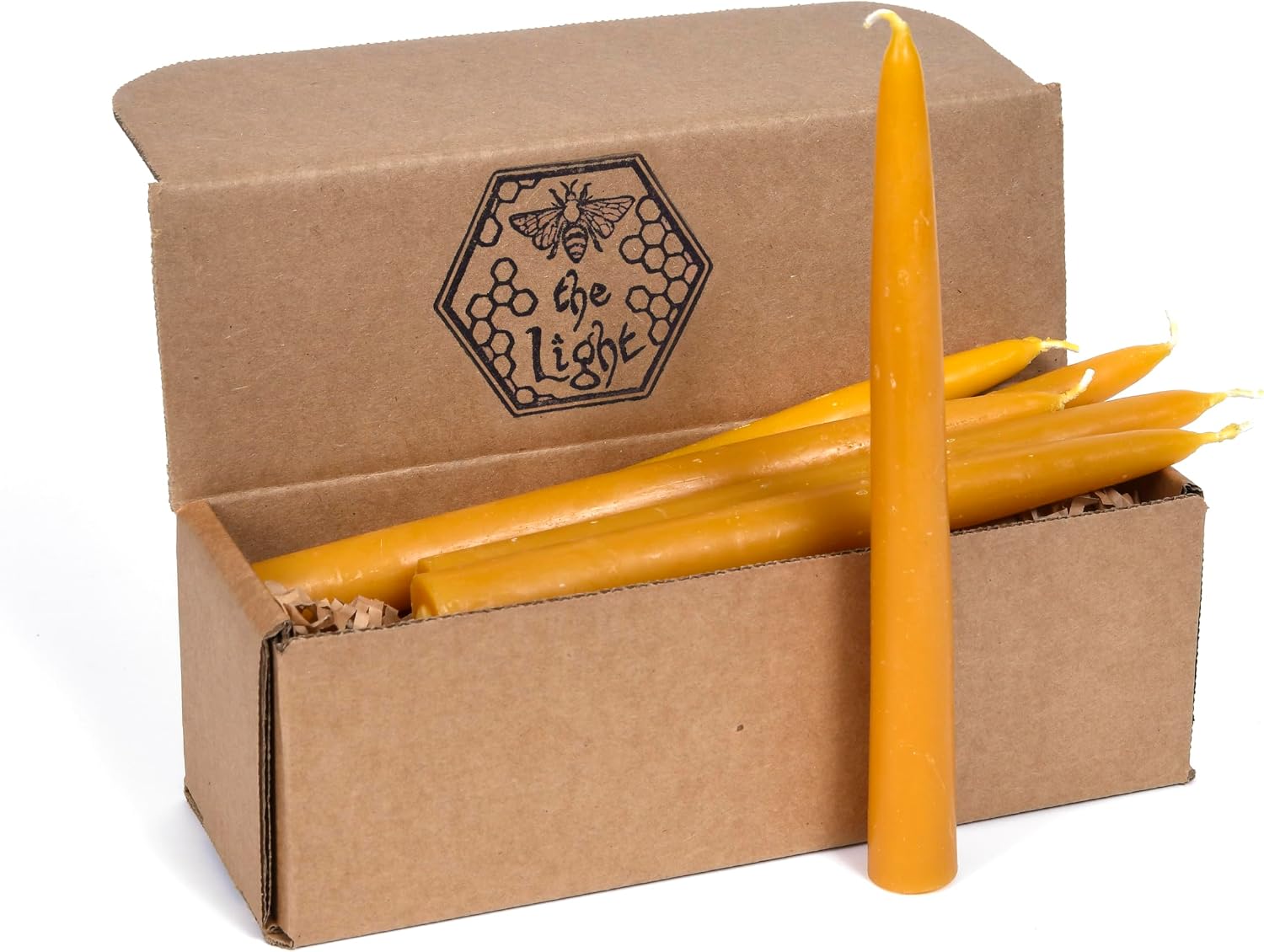
100% Pure Beeswax Taper Candles, 8.5 Inches, 12 Candle Set, by BeeTheLight
Twelve dipped beeswax tapers in one box, unscented and smokeless, made for a table
Tapers drip in a draft, each one is a short burn, and you need holders with snug sockets
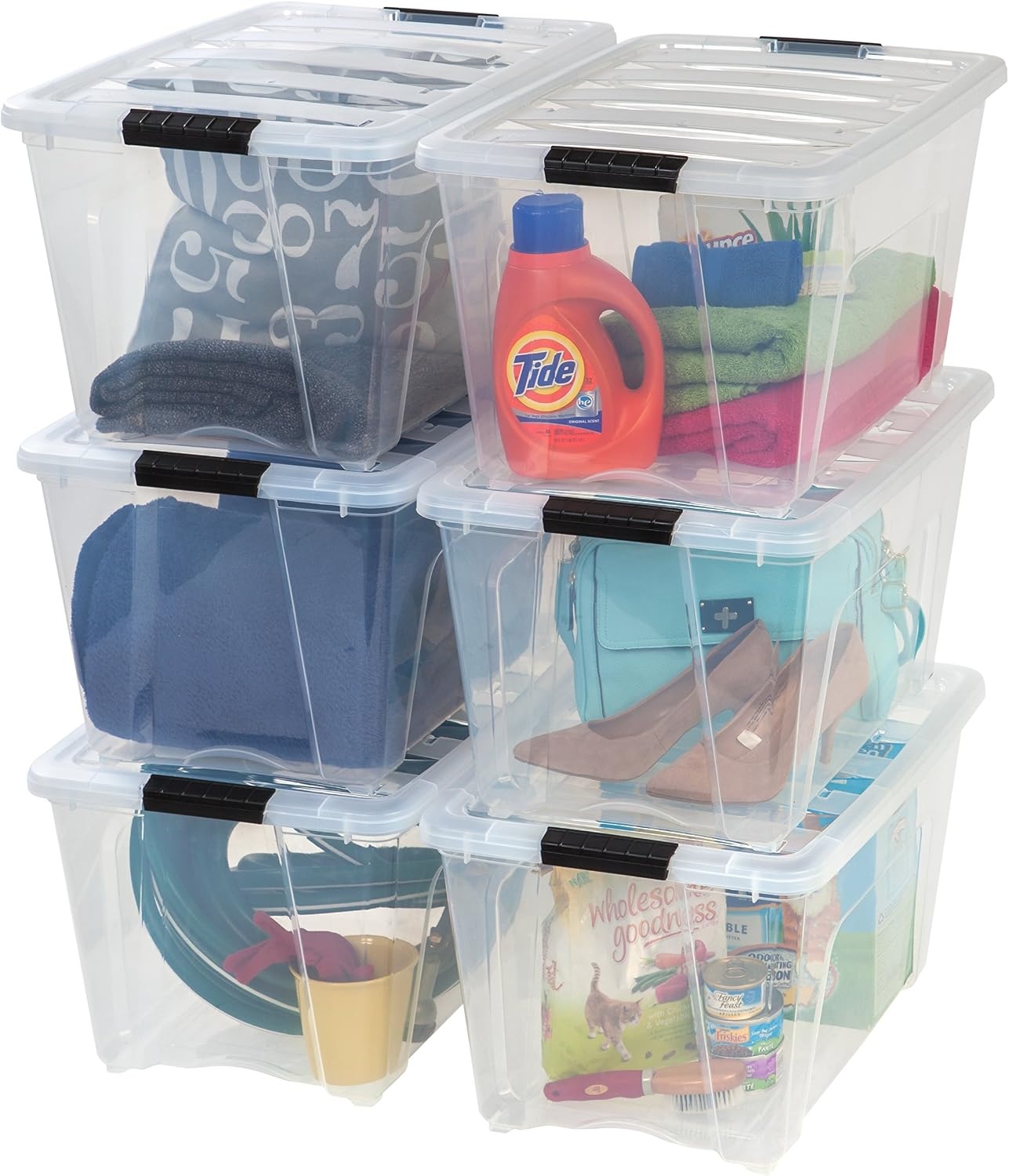
IRIS USA 6-Pack 54 Quart Storage Bins with Lids, Clear
Clear walls so you can see the stash, lids that keep dust off, room for jars and taper boxes
Not a candle, bulky for a small collection, and clear plastic is not light protection
Prices and availability were captured from Amazon Creators API and may change.
How I judge a candle before I write a word
Every recommendation on this site passes the same test, and the test starts before the flame. First I read the label's fine print: what is the wax blend, and what does the fragrance load actually say? Then the wick, because the wick is the whole game. A wick that is undersized for the jar diameter tunnels, no matter how good the wax is. A wick that is oversized mushrooms, soots the glass, and burns hot enough to cook the fragrance oil instead of releasing it.
Then the first burn, which is where most candles are won or lost. I trim to a quarter inch, light it, and time the melt pool. If the pool does not reach the edge of the jar within two to three hours, that candle has already told me what it is going to do for the rest of its life. I measure hot throw in a closed 12x12 room, at hour one and again at the halfway mark, and I write down flame height and any soot streaking in the journal. Nothing gets recommended here without 50+ logged burn hours across multiple three and four hour sessions.
That standard is why this list is short. It is also why the list mixes waxes. I pour soy in my own batches and I still keep a paraffin-heavy jar on the shelf, because the wax debate is a luxury and the result is a fact.
Scented jars: the Chesapeake Bay pick
If your goal is a room that smells like something when guests walk in, you want a scented jar, and you want one where the fragrance is in the wax rather than sprayed on the label. The Chesapeake Bay Candle Mind & Body Collection jar is the 8.8 ounce size, which is the format I hand to people who want a scented candle without committing to a three-wick monster they will never finish.
Small jars are honest teachers. There is less wax to hide behind, so the first burn matters more. A tunneled 8.8 ounce jar has maybe an inch of standing wax walls and a hole down the middle, and every burn after that gets dimmer and weaker. Follow the first-burn rule and this format behaves: a full, even pool, a steady flame, and a scent that reads across a room instead of only over the jar.
The trade-off with any jar this size is hours. Small wax volume means fewer of them. That is not a flaw, it is arithmetic, and it is why I tell people to buy the small jar if they want variety and the big jar if they want a season-long workhorse.
Beeswax pillars: Big Dipper Wax Works
A 100% beeswax pillar is a different product with a different job. The Big Dipper Wax Works pillar is three inches across and three and a half inches tall, natural color, no added fragrance. That last part matters: the honey smell you get is the wax itself, not a fragrance oil, so it stays faint and warm instead of filling the room. If you are looking for throw, this is not your candle. If you are looking for a clean flame, a natural scent, and a format that does not need a jar, it is.
Pillars also change the way you burn. You are not chasing a melt pool to the edge of glass, you are managing a free-standing column that will tunnel from the top if you rush it and slump if you leave it too close to a draft. Beeswax is dense and slow, so the wick wants trimming every session, and the pillar wants a plate or a holder with a spike. Get those two things right and a pillar of this size is the calmest candle on the shelf.
My honest caveat: beeswax is the most expensive wax per pound, and a pillar this size asks you to pay for material rather than for a scent experience. Buy it because you want the burn, not because you want the smell.
Beeswax tapers: the BeeTheLight set
Tapers are the format people forget until the holidays, and then they buy the cheapest box in the grocery aisle and wonder why the flame dances and the wax runs down the holder. The BeeTheLight set is twelve dipped 100% beeswax tapers at 8.5 inches, unscented and smokeless, in the natural yellow that comes from the wax rather than a dye pot. Twelve in a box is the right number for an advent wreath, a Hanukkah menorah, or a dinner table that gets used more than twice a year.
Tapers have three rules and they are all about the wick. Trim to a quarter inch before every light. Keep them out of drafts, because a dancing flame is a dripping flame. And use holders with snug sockets, because a taper that leans is a taper that paints wax down the side of your candlestick.
What you give up is time per candle. A slim taper is a short burn by design, so this set is about moments and settings, not about a four-hour evening. That is fine. Not every candle needs to be a marathon.
The part nobody wants to buy: storage
Here is the least romantic line item in this article. The IRIS USA six-pack of 54 quart storage bins is not a candle, and I am not going to pretend it is. It is the thing that keeps the rest of your collection worth burning.
Fragrance fades. Wax picks up dust. Jars left on a sunny windowsill go soft and discolored, and a scented candle that sat in direct light for a summer will smell like a shadow of itself by the time you light it. Lids matter for that. Clear walls matter for a different reason: you cannot burn what you cannot see, and a stash buried in an opaque box becomes a collection you forget about until it is stale.
The honest limits: these bins are 54 quarts each, so six of them is more volume than most people's candle drawer needs, and clear plastic does not block light. Store the bins in a closet or a basement shelf and the clear walls become a feature instead of a flaw. If your collection is four jars, skip this and use a cabinet.
The trade-offs, stated plainly
Price per burn hour is the only honest comparison in this category, and it cuts across all four of these picks. The scented jar gives you fragrance and a shorter life. The beeswax pillar and the taper set give you clean, long, unscented flame time and ask you to pay more per pound of wax to get it. The storage bins cost money and produce zero light, and they are still the purchase that protects everything else.
So the answer to beeswax vs scented candles is not a winner. It is a division of labor. One scented jar for the living room, one beeswax pillar for the desk where you want a flame and not a perfume, one box of tapers for the table, and a lidded place to keep the spares out of the sun.
If you only buy one thing from this list, buy the format that matches the room you actually sit in. If you buy two, add the storage, because the candles you already own are the cheapest candles you will ever burn.
The first burn rule, one more time
Whatever you pick, trim the wick to a quarter inch, light it, and let the melt pool reach the edge before you blow it out. Two to three hours for a jar, less for a taper, and never more than four hours in one session no matter how good the show is. Most candles that get called defective were never given a fair first burn, and most candle problems are wick problems wearing a wax costume.
That is the whole craft on one sheet of paper, same as the laminated chart over my desk.